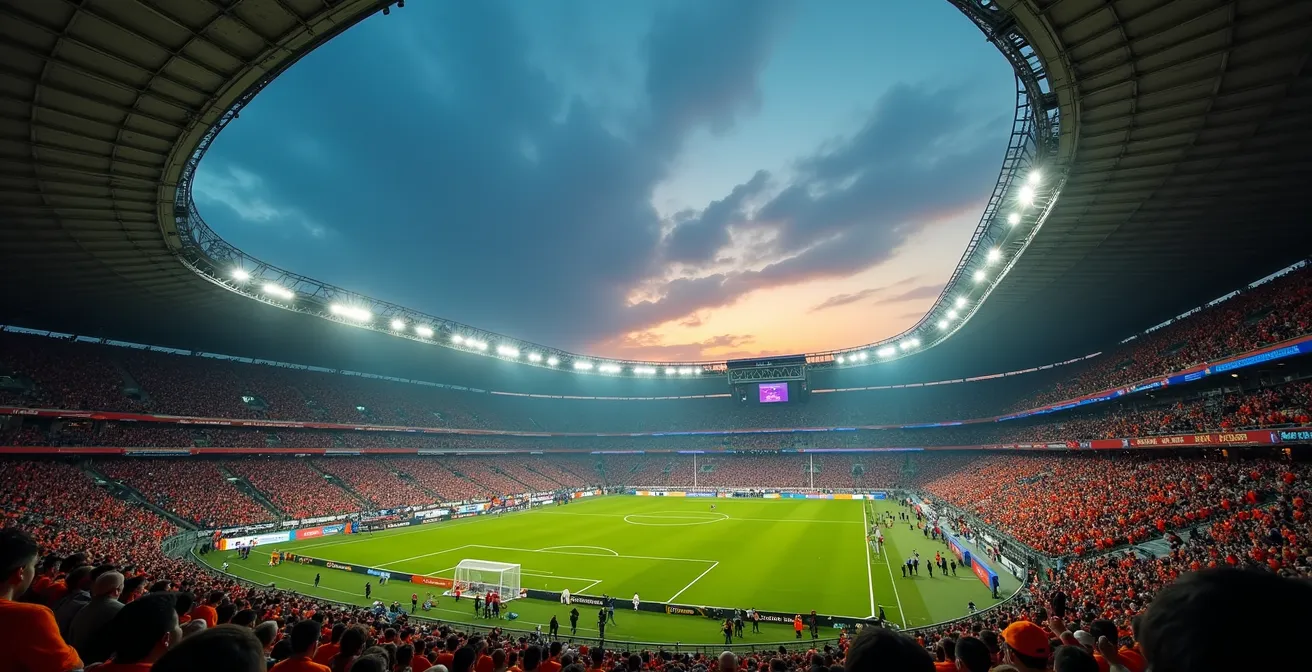
The raw passion of South American football is a myth; the Copa Libertadores’ intensity is a calculated, weaponized element of play designed to systematically dismantle opponents.
- The stadium environment, from high-altitude air to synchronized chants, is actively used as a tactical tool to disrupt players’ physical and cognitive abilities.
- Fan expression, including flares and relentless singing, is a form of cultural resistance and psychological warfare, not just a spectacle.
Recommendation: Watch the next Libertadores match not just as a game, but as a masterclass in atmospheric warfare, and you’ll see the sport in a new light.
For any global football fan accustomed to the polished, almost corporate, theatre of European nights, a first encounter with the Copa Libertadores is a profound shock to the system. The television screen seems to vibrate, the sound crackles with a raw, untamed energy, and the stands transform into a living, breathing creature of colour, smoke, and sound. The immediate conclusion is simple: South American fans are just more passionate. It’s a convenient, romantic notion that we, as journalists of this continent, have heard and read a thousand times.
But to dismiss this phenomenon as mere ‘passion’ is to fundamentally misunderstand it. It is to look at a tactical masterclass and see only chaos. The intensity of the Copa Libertadores is not an accident of emotion; it is a weapon. It is a consciously-wielded element of strategy, a form of spiritual and psychological warfare where the stadium itself—from the thin air of La Paz to the unified roar of a Buenos Aires *barra brava*—becomes the twelfth player. This is not just noise; it’s a sensory assault designed to break an opponent’s rhythm, focus, and will.
This is a reality far removed from the choreographed fan displays and controlled environments of Europe. Here, the atmosphere is not a backdrop to the game; it is an active participant in it. To truly comprehend the gap in intensity, one must dissect the components of this atmospheric weapon, from the environmental battlegrounds that choke the unprepared to the psychological rituals that fortify the home side and demoralize the visitors. This article will deconstruct how these elements combine to create the most formidable home-field advantage on the planet.
This guide will break down the key components that forge the unique and intimidating atmosphere of the Copa Libertadores, exploring how each element contributes to a spectacle unlike any other in world football.
Summary: Deconstructing the Intangible Weapon of the Copa Libertadores Atmosphere
- Why Playing at High Altitude in La Paz Is the Ultimate Test for Visiting Teams?
- How Teams Prepare Psychologically for Hostile Copa Libertadores Away Legs?
- Tactical Discipline or Individual Flair: Which Dominates the Copa Libertadores?
- The Discipline Mistake That Results in Red Cards During Heated Copa Matches
- How to Manage Travel Logistics for a 10-Hour Flight Mid-Week in South America?
- Why Specific Songs Trigger Adrenaline Spikes in Home Players?
- Why Fans View Flares as an Essential Part of the Matchday Expression?
- How Team Chemistry Is Built Off the Pitch During Pre-Season Tours?
Why Playing at High Altitude in La Paz Is the Ultimate Test for Visiting Teams?
Playing in La Paz is the ultimate test because the extreme altitude isn’t just a physical hurdle; it’s a cognitive weapon. At 3,600 meters above sea level, the thin air starves muscles of oxygen, inducing fatigue and breathlessness at a terrifying pace. But the most insidious attack is on the brain. The state of hypoxia, or oxygen deprivation, actively works to dismantle a player’s core abilities, turning seasoned professionals into hesitant amateurs. It’s the opening salvo in the atmospheric war, a natural fortress that begins to defeat teams long before kickoff.
This is not anecdotal. Scientific evidence confirms the neurological impact. Recent research showing that hypoxia exposure significantly impairs reaction time, response accuracy, and even memory provides a clinical explanation for the on-field chaos. A player’s decision-making process, normally executed in fractions of a second, becomes sluggish. A simple pass is misjudged; a defensive run is started a split-second too late. For a visiting team, every minute on the pitch is a battle against an invisible opponent that is clouding their judgment and slowing their thoughts.
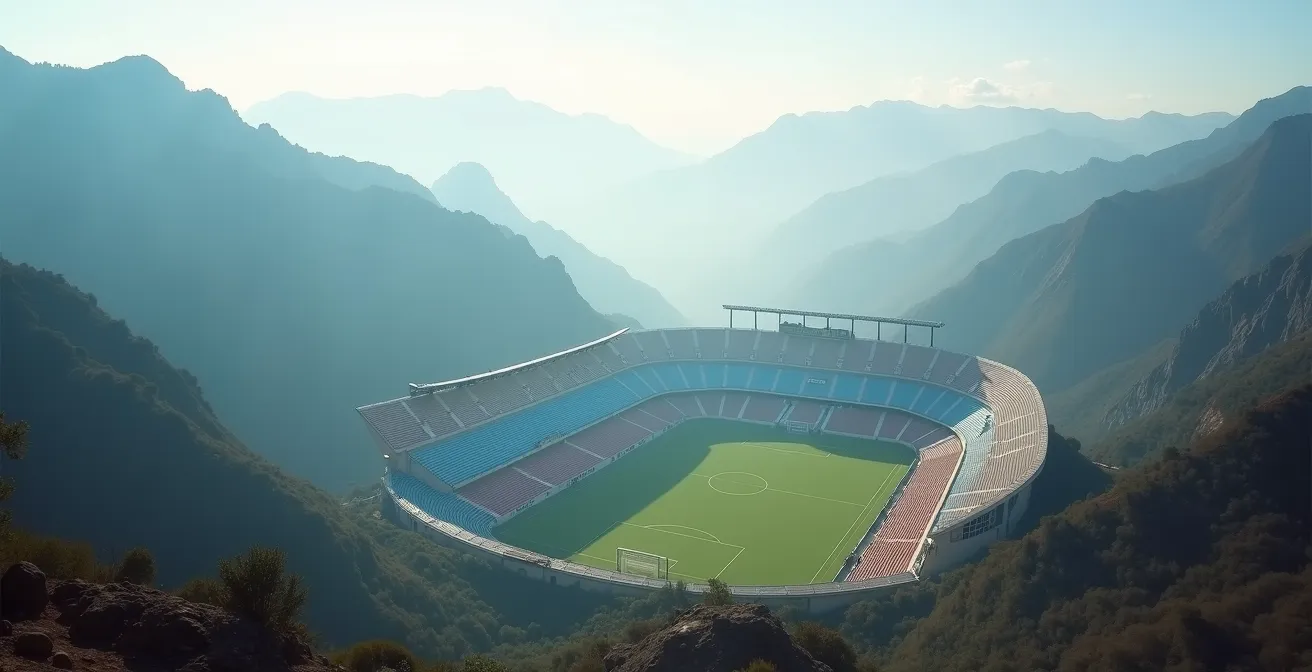
The psychological toll is just as severe. As the body struggles, the mind panics. The constant gasping for air creates a feeling of drowning, triggering anxiety and a sense of helplessness. Local teams, fully acclimatized and tactically astute, exploit this. They play at a higher tempo, forcing errors from opponents who are both physically and mentally compromised. Facing a team at altitude in the Copa Libertadores is not just about having superior fitness; it’s about withstanding a systematic, environmental attack on your very ability to play the game intelligently.
How Teams Prepare Psychologically for Hostile Copa Libertadores Away Legs?
Surviving a Copa Libertadores away leg requires more than tactical prowess; it demands a campaign of psychological warfare in its own right. Teams understand they are not just traveling to a football match, but entering a cauldron specifically designed to unnerve and intimidate them. Preparation, therefore, becomes an exercise in mental fortification, building a psychological fortress to withstand the sensory assault that awaits. The goal is to neutralize the “twelfth player” before it can land a single blow.
The preparation is meticulous and starts weeks in advance, focusing on desensitization and resilience. As the ISSPF Research Team notes, the physical stress of travel and altitude can lead to mental fatigue, and players “might feel overwhelmed by the challenges posed by altitude, impacting their decision-making and focus on the field.” To counter this, elite clubs employ sports psychologists who work on creating a ‘bubble’ around the team. This involves isolating players from hostile local media, managing social media exposure to avoid inflammatory content, and establishing strict routines that create a sense of normalcy amidst the chaos.
The most advanced teams take it a step further, simulating the hostile environment in training. By blasting recordings of stadium-specific chants and crowd noise during physically demanding drills, they attempt to inoculate players against the sensory overload they will face. This isn’t just about getting used to the noise; it’s about training the brain to maintain cognitive function under duress. Experienced players, or ‘veterans’, play a crucial role in mentoring younger teammates, sharing coping mechanisms and reinforcing the team’s collective identity as a shield against external pressure.
Action Plan: Surviving the Hostile Environment
- Implement sensory overload simulation using stadium-specific crowd recordings during training.
- Create a ‘veteran bubble’ with experienced players mentoring younger teammates.
- Establish media blackout protocols to isolate the team from hostile narratives.
- Practice cognitive resilience exercises under physical stress conditions.
- Develop team-specific rituals to maintain focus amidst the chaos.
Tactical Discipline or Individual Flair: Which Dominates the Copa Libertadores?
A common European misconception about the Copa Libertadores is that it’s a chaotic festival of individual brilliance—a stage for mavericks and magicians where rigid tactics dissolve in the heat of passion. While the tournament is certainly a showcase for sublime talent, or *garra*, the modern reality is a fascinating and brutal tug-of-war between this innate flair and the cold, hard necessity of tactical discipline. In truth, neither dominates; they are locked in a perpetual, high-stakes battle for control of the game.
The financial incentives have played a significant role in this shift. The romance of pure, unadulterated flair becomes harder to justify when there are millions on the line. The pressure to adopt more structured, European-style systems has intensified, especially as the financial stakes influence tactical approaches, with champions securing substantial rewards. This has led to the rise of meticulous coaches, many from Europe like Jorge Jesus and Abel Ferreira, who have achieved success by implementing high-pressing schemes and disciplined positional play. Their triumphs have forced a tactical evolution across the continent, where organization is no longer seen as the enemy of creativity.
However, the unique pressures of the Libertadores mean that pure tactical rigidity is also a path to failure. A system that works perfectly on a quiet training ground can shatter in the face of a hostile away crowd, a bumpy pitch, and an opponent playing with pure, unyielding aggression. This is where individual flair becomes a tactical weapon. A moment of unpredictable magic from a star player can break a defensive deadlock, relieve pressure, and change the entire emotional tenor of a match. The most successful teams are not those who choose one philosophy over the other, but those who can master the blend: disciplined enough to withstand the storm, and possessing the individual genius to conjure a miracle within it.
The Discipline Mistake That Results in Red Cards During Heated Copa Matches
In the pressure cooker of a Copa Libertadores knockout match, discipline is not just a virtue; it’s a survival mechanism. The single biggest mistake that leads to a red card is a momentary loss of emotional control—a snap decision fueled by the surrounding chaos rather than tactical intelligence. It’s the moment a player stops playing the game and starts playing the occasion. The roaring crowd, the provocative opponent, the perceived injustice from a referee—it all combines into a perfect storm that can hijack a player’s rational mind. A late, retaliatory tackle or a petulant shove is often a symptom of this psychological surrender.
The 30-Second Red Card: Botafogo’s Costly Lack of Discipline
A stark illustration of this breakdown occurred in the final when Botafogo’s Gregore was sent off just 30 seconds into the match. In a moment of madness, he launched a flying kick that struck an opponent in the head, earning an immediate red card for serious foul play. Despite eventually winning, his team was forced to play almost the entire final with 10 men, a monumental task created by a single, catastrophic lapse in discipline. This incident serves as a brutal reminder of how the intense atmosphere can lead a player to make a decision that is completely detached from the strategic needs of the team.
Referees in South America are also conditioned by this environment. They expect a high level of physicality and are often more lenient with robust challenges than their European counterparts. This creates a dangerous grey area. A tackle that might earn a yellow card in the Premier League could be ignored, luring players into a false sense of security. However, when the line is crossed, the punishment is often swift and severe. The critical error is misjudging that line, mistaking the tolerance for physicality as a license for aggression. The most common trigger for a red card is not the initial foul, but the reaction to provocation—the second, unnecessary action that proves malicious intent.

Ultimately, maintaining discipline in a heated Copa match is a test of mental endurance. The players who thrive are those who can absorb the energy of the stadium without letting it consume them. They understand that the greatest weapon against a hostile environment is a calm mind. The players who fail are those who allow the external chaos to become internal, making the one mistake that can cost their team everything.
How to Manage Travel Logistics for a 10-Hour Flight Mid-Week in South America?
Managing the travel for a Copa Libertadores away match is a military-grade logistical operation, a crucial battle fought before the war on the pitch even begins. A 10-hour flight across multiple time zones, followed by a high-stakes match in a hostile city, is a recipe for physical and mental exhaustion. The primary goal of the logistics team is to create a “travel bubble,” insulating the players from as much of the inherent friction and stress as possible. This process is about minimizing disruption and controlling every possible variable.
The first and most critical element is the flight itself. Commercial flights are almost always out of the question due to inflexible schedules, layovers, and the risk of disruption from rival fans. Teams invest heavily in charter flights, which allow them to control departure and arrival times, customize meal plans for in-flight nutrition, and create a calm environment for rest and recovery. Upon arrival, the battle against the external environment continues. Hotels are carefully scouted and booked months in advance, prioritizing isolation and security over luxury. The ideal hotel is located away from city centers and known fan congregation zones to prevent the common tactic of rival supporters setting off fireworks outside the team’s hotel all night.
Dietary control is another non-negotiable pillar of the operation. Teams travel with their own chefs and nutritionists, and in some cases, even their own food and water supplies. This eliminates the risk of illness from unfamiliar food and ensures that players’ precise nutritional plans are maintained. Every detail, from the pre-scouting of local training facilities to the security detail that escorts the team bus, is managed with precision. The table below highlights just one of the environmental challenges teams face, showing how altitude varies dramatically across the continent, adding another layer of complexity to preparation.
| City | Altitude (m) | Impact on Visiting Teams |
|---|---|---|
| La Paz, Bolivia | 3600m | Severe hypoxia, 2.18 goal disadvantage |
| Quito, Ecuador | 2800m | Moderate altitude stress |
| Bogotá, Colombia | 2600m | Mild acclimatization needed |
| Sea level cities | 0m | No altitude impact |
Why Specific Songs Trigger Adrenaline Spikes in Home Players?
The songs and chants of a South American stadium are not mere background noise; they are the lifeblood of the atmosphere, a form of sonic warfare that directly impacts the players on the pitch. Specific songs trigger adrenaline spikes in home players because they are deeply encoded with identity, memory, and a sense of collective power. These are not generic pop songs played over a PA system; they are anthems passed down through generations, sung with a fervor that, as RKT Football describes, creates an “immersive, almost religious atmosphere.” For a player, hearing that specific chant is a powerful affirmation: you are not alone; an army is with you.
This phenomenon is rooted in the science of auditory-motor synchronization and emotional contagion. The relentless, pulsating rhythm of the drums, led by the *torcidas organizadas* or *barras bravas*, synchronizes the crowd’s energy and, by extension, influences the players. This steady, powerful beat can unconsciously regulate a player’s breathing and even their stride, providing a rhythmic foundation that counters the chaos of the game. When a familiar, beloved song erupts from the stands, it acts as a powerful psychological trigger. It can evoke memories of past victories, honor club legends, and reinforce the profound connection between the team and its community.
For the home player, this sonic fortress provides a surge of adrenaline, confidence, and a heightened sense of purpose. It reminds them of who they are playing for. The roar of the crowd becomes a “thunderous declaration of tribal allegiance,” a force that seems to shake the very foundations of the ground. Conversely, for the visiting player, this same wall of sound is a relentless sensory assault. It is disorienting, oppressive, and designed to isolate them, to remind them that they are intruders in a hostile land. The songs are a key mechanism for creating the us-versus-the-world mentality that is the spiritual core of the Copa Libertadores.
Why Fans View Flares as an Essential Part of the Matchday Expression?
To the outside observer, the mass ignition of pyrotechnics in a crowded stadium seems like a reckless and dangerous act. But for the hardcore supporters of a South American club, flares are not just a spectacle; they are an essential, non-negotiable part of their identity and expression. Fans view flares as a vital tool of visual warfare and an act of cultural resistance. They are a primal, fiery declaration of presence, passion, and unwavering support, designed to both inspire their own team and intimidate the opposition with a vision of hell on earth.
This act is deeply rooted in what cultural criminologist Mike Presdee calls the “carnival of crime.” Within this framework, the use of flares is a deliberate, aesthetic violation of the rules. By intentionally lighting pyrotechnics despite the bans and heavy fines, ultras are not simply being delinquent; they are positioning themselves as cultural actors resisting the sterile, commercialized, and over-regulated version of modern football. As Presdee argues, through these “intentional violations of rules…ultras present themselves not as offenders, but as cultural actors resisting the commercialization of football.” The flare becomes a symbol of authenticity, a beacon of raw, untamed passion in a sport that they feel is losing its soul.
The willingness to face severe consequences reinforces the significance of this act. Clubs are routinely hit with massive penalties for the actions of their fans. For example, River Plate was fined a total of $195,000 and forced to play a match behind closed doors after their infamous pyrotechnic display in the 2024 semifinals. The fact that fans continue this practice, knowing it financially harms their own club, demonstrates that they see it as a necessary sacrifice. For them, a match without flares is a match devoid of its spirit, and the visual spectacle of the fire and smoke is a core part of the “spiritual warfare” they wage from the stands.
Key Takeaways
- The intense atmosphere is a calculated tactical weapon, not just a byproduct of passion.
- Environmental factors, especially high altitude, are used as a form of physiological and cognitive warfare.
- The psychological battle, waged through chants, travel logistics, and intimidation, is as crucial as the on-pitch action.
How Team Chemistry Is Built Off the Pitch During Pre-Season Tours?
While European clubs build chemistry through glossy, international pre-season tours, South American teams forge their bonds in a far more primal crucible: the shared cultural identity of their local communities. The unbreakable chemistry seen in the Copa Libertadores is not built in hotels or during marketing events; it is inherited and reinforced by the deep-rooted historical significance of the club itself. Players are often products of the communities they represent, and they understand from a young age that they are not just athletes, but custodians of a local identity.
The infamous *clássicos*, or local derbies, are the primary forges for this chemistry. These are not just football matches; they are, as described by observers, “deeply rooted in the cultural and historical identities of the cities and communities they represent.” A derby against a fierce rival is a test of allegiance that solidifies the “us-against-the-world” mentality. The shared pressure, the collective responsibility to defend the honor of their neighborhood, and the triumph or despair that follows creates a bond that no team-building exercise ever could. The team becomes a family, united against a common enemy.
This off-pitch unity becomes a tangible asset on it. When a team travels to a hostile away fixture, facing the sensory assault of the home crowd, this ingrained chemistry acts as a shield. Players trust each other implicitly because their bond goes beyond a professional contract. They are fighting for the same cause, the same colors, the same piece of land. This shared identity is the ultimate source of resilience. It is what allows a team to withstand the pressure, to remain united in the face of chaos, and to find the collective strength to overcome the most intimidating atmospheres in world football. The chemistry is not built; it is lived.
So the next time you tune in to a Copa Libertadores match, look beyond the goals and tackles. Watch for the subtle signs of the atmospheric war: the visiting striker gasping for air at altitude, the home team surging with a familiar chant, the defiant glow of a flare in the stands. You are not just watching a football game. You are witnessing a unique cultural phenomenon, a masterclass in how passion, identity, and environment can be forged into the most potent weapon in sports.