
The power of a smart stadium app isn’t in its list of features, but in its ability to architect a seamless digital journey.
- This transforms fans from passive spectators into active participants through immersive AR and live data.
- It eliminates physical friction points like ticketing and concession queues, maximizing both comfort and revenue.
Recommendation: Stadium operators should focus on building an integrated ecosystem that provides tangible value in exchange for fan data.
The roar of the crowd, the thrill of a last-minute goal, the shared energy of 60,000 people—these are the timeless elements of a live sporting event. For decades, the stadium experience was largely an analog one. But today, a digital revolution is unfolding in the palm of every fan’s hand. Tech-savvy fans and innovative stadium operators are looking beyond simple mobile ticketing and exploring a new frontier of engagement. We often hear about apps offering food delivery or replays, but these are just individual features, not a cohesive strategy.
The shift is profound. We are moving from a passive viewing model to an interactive, co-created experience. But if the true key isn’t just adding more features, what is it? The answer lies in digital journey mapping. The most successful smart stadium apps are not just feature-rich platforms but cohesive digital ecosystems. They are meticulously designed to transform the passive spectator into an active participant, architecting a seamless, personalized journey where every digital interaction deepens the real-world connection to the team and the community.
This guide explores the critical components of this new digital architecture. We will deconstruct how essential technologies are not just conveniences, but foundational pillars for a richer, more connected, and ultimately more human matchday. We will analyze everything from the network that powers it all to the ethical questions that arise when the experience becomes truly personalized.
Summary: The New Architecture of the Fan Journey
- Why 5G Connectivity Is Now the Number One Demand for Gen Z Fans?
- How to Troubleshoot NFC Ticket Failures at the Turnstile?
- Seat Service or Halftime Rush: Which Maximizes Revenue and Comfort?
- The Privacy Risk of Using Stadium Apps That Track Your Location
- How to Use the App to Watch Replays While the Game Is Live?
- Stats Portal or Scout Report: Which Should You Trust for Transfer News?
- How to Convert 60,000-Seat Stadiums into Sustainable Community Hubs?
- Why Dynamic Pricing Is Making Season Tickets Unaffordable for Locals?
Why 5G Connectivity Is Now the Number One Demand for Gen Z Fans?
For previous generations, attending a match was about being present in the moment. For Gen Z, being present involves capturing, augmenting, and sharing that moment digitally. This is not a distraction from the event; it is the event. Their experience is one of co-creation, where they broadcast their unique perspective to their social networks. This fundamental shift makes robust, high-speed connectivity not a luxury, but the foundational layer of the entire modern fan journey. Without it, the smart stadium concept collapses.

The demand is driven by data-intensive applications that go far beyond a simple social media post. Fans now expect to engage with the game on a deeper level. In fact, a Nielsen survey confirms that over 55% of Gen Z respondents expect to see and interact with live statistics during play. This could mean watching AR overlays of player stats, accessing multi-angle replays, or participating in live polls. The average data consumption at a single Bundesliga match has already reached 500 Gb, a figure that is growing exponentially. Legacy Wi-Fi and 4G networks simply cannot handle the density and bandwidth requirements of tens of thousands of fans simultaneously using these next-generation features. 5G’s low latency and high capacity are the only viable solutions to power this new, interactive reality.
How to Troubleshoot NFC Ticket Failures at the Turnstile?
The fan’s digital journey begins before they even see the pitch, with the first major friction point: the turnstile. Near Field Communication (NFC) ticketing promises a seamless tap-and-go entry, but a failed scan can create immediate frustration and long queues, souring the experience from the outset. Architecting a frictionless entry requires both educating the fan on best practices and having a robust backup system for when technology inevitably falters.
Common causes for NFC failure range from low phone battery and incompatible phone cases to simple user error, like not holding the device steady near the reader. While stadiums can optimize reader placement and sensitivity, a significant part of the solution involves proactive fan communication. Providing a simple checklist within the app before matchday can mitigate a majority of these issues. However, for the instances that still fail, the venue’s response is critical. The most innovative stadiums are implementing alternative, high-speed authentication methods. A prime example is the ‘Express Access’ system used by the Cleveland Browns, which leverages facial authentication. Fans link a selfie to their account, allowing entry in just two seconds. According to Wicket, the technology provider, this clears gates 10 minutes faster and saves the team over $8,000 per lane annually.
Your Action Plan: Ensuring a Smooth NFC Entry
- Universal Wallet Integration: Link your ticket to your phone’s native Apple or Google Wallet. These are often more reliable than bespoke, single-venue apps.
- Pre-Arrival Power Check: Ensure your phone’s NFC is enabled and the battery is above 20% before you reach the stadium gates.
- Case Removal: If your phone case contains metal parts or RFID-blocking materials, remove it before approaching the turnstile.
- The Steady Hold Technique: Hold your phone steady, within 1-2 inches of the reader’s surface, for at least 2-3 seconds to ensure a successful scan.
- Backup Plan Awareness: If failure persists, look for the stadium’s designated ‘Express Access’ or ‘Fan Services’ lane, which may use alternative methods like facial authentication or QR code scanning.
Seat Service or Halftime Rush: Which Maximizes Revenue and Comfort?
Once inside, the next major friction point is concessions. The traditional “halftime rush” is a lose-lose scenario: fans miss part of the game while waiting in long lines, and stadiums face revenue caps due to service bottlenecks. Smart stadium apps are completely re-architecting this experience, moving from a centralized rush to decentralized, on-demand service. The two leading models are in-seat mobile ordering and fully autonomous, cashierless stores.
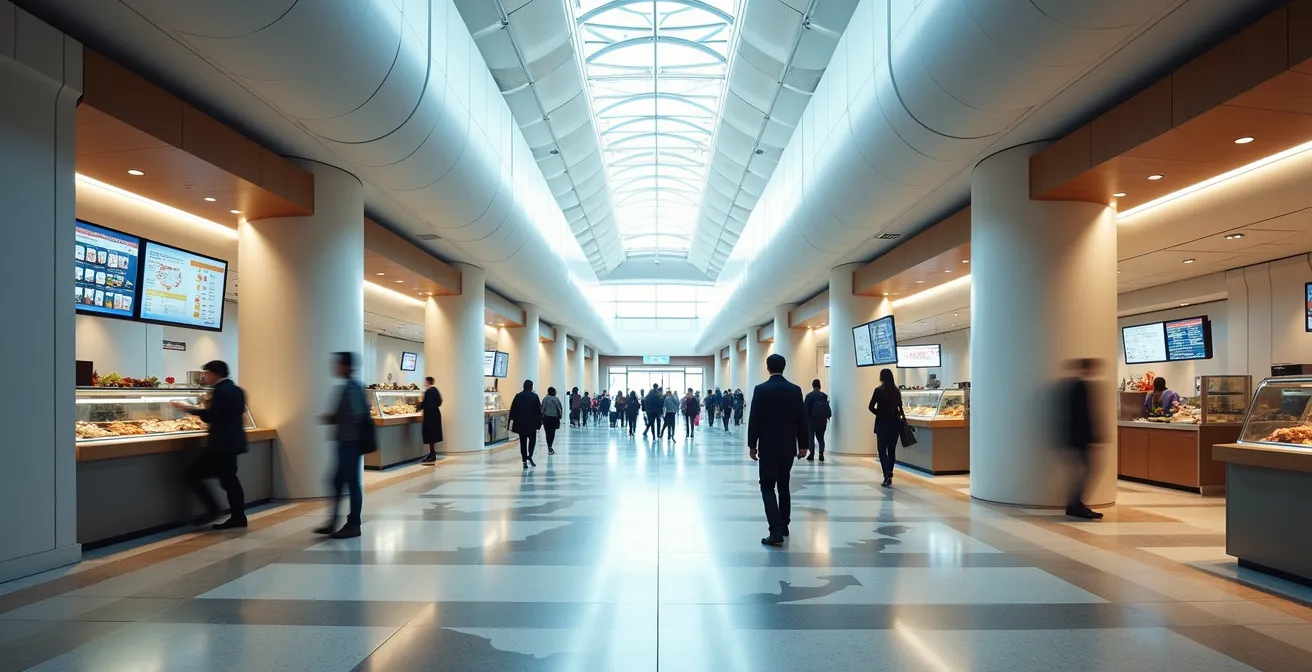
The data clearly shows a massive upside to eliminating queues. Venues that have implemented AI-driven concession management and mobile ordering report significant gains in both efficiency and sales. According to one industry analysis, stadiums using AI for concession management report an average of 30% shorter wait times and, critically, a 25% increase in per-capita spending. When fans don’t have to worry about missing the action, they are more inclined to make purchases. This transforms concessions from a necessary evil into a seamless part of the entertainment.
The choice between in-seat delivery and autonomous checkout depends on the venue’s infrastructure and goals, but both vastly outperform the traditional model. A hybrid approach, using predictive AI to manage inventory for both models, shows the most promise for maximizing both fan satisfaction and revenue.
| Model | Average Wait Time | Revenue Per Fan | Fan Satisfaction | Implementation Cost |
|---|---|---|---|---|
| Traditional Halftime Rush | 12-15 minutes | $18-22 | 65% | Low |
| In-Seat Mobile Ordering | 0 minutes (delivery) | $28-32 | 85% | Medium |
| Hybrid Predictive Model | Under 60 seconds | $35-40 | 92% | High |
| Autonomous Checkout | Under 1 minute | $30-35 | 90% | High |
The Privacy Risk of Using Stadium Apps That Track Your Location
This new era of personalized service is fueled by data—specifically, your location within the venue. While location tracking enables powerful features like seat-finding, directing you to the shortest restroom line, or offering targeted discounts, it also opens a Pandora’s box of privacy concerns. For the modern fan, the question becomes a “value exchange”: is the convenience I’m receiving worth the data I’m providing? For stadium operators, building trust through transparency is paramount.
The benefits are often tangible and immediate. As one technology provider’s guide explains, location data can trigger real-time offers. For instance, Cisco highlights a common use case in its smart stadium solutions:
We use your location to offer you a 10% discount at the nearest merchandise stand
– Cisco Spaces, Smart Stadium Solutions Guide
While a discount is appealing, fans are increasingly aware of the implications of constant tracking. What other data is being collected? How long is it stored? Is it being sold to third parties? A failure to address these questions can lead to app uninstalls and a breakdown of trust. The best practice for venues is to offer granular privacy controls, allowing fans to opt-in to specific services rather than demanding blanket permissions. This user-centric approach empowers fans and builds a healthier, more sustainable digital relationship. Key controls include:
- ‘Stadium Mode Only’ Settings: Restricts all location tracking to the physical boundaries of the venue and only during the event.
- Granular Permissions: Allowing users to disable camera or microphone access if they are only using the app for ticketing or ordering.
- Guest Mode: Offering basic functionality like ticketing without forcing users to create a detailed personal profile.
- Data Deletion Requests: Providing a clear and simple process for fans to request the deletion of their personal data after an event.
How to Use the App to Watch Replays While the Game Is Live?
One of the most powerful ways smart apps enhance the core viewing experience is by giving fans control over what they see. In a packed stadium, it’s easy to miss a crucial play or want a different view of a spectacular moment. In-app live replays and multi-angle streaming solve this problem, effectively giving every fan a personal production truck in their pocket. This feature is a prime example of “co-creation,” where the fan curates their own viewing experience in real-time.
The technology leverages the stadium’s broadcast feed and the high-speed 5G network to deliver multiple camera angles directly to the user’s device with minimal latency. Fans can instantly rewind the action, switch to the end-zone camera to analyze a play, or zoom in on a specific player. This capability was showcased on the world’s biggest stage during Super Bowl LVI. As detailed in a GSMA report on 5G in stadiums, fans with the official app could access Verizon’s Multi-View feature. This allowed them to choose from seven different live camera angles and rewind the action at will. Furthermore, they could project augmented reality overlays of NFL’s ‘Next Gen Stats’ directly onto their view of the field, blending the digital and physical worlds seamlessly.
This level of interaction fundamentally changes the role of the spectator. They are no longer just watching the game; they are analyzing it, directing their own coverage, and gaining insights previously reserved for broadcast analysts. For stadium operators, this feature is a massive value-add that dramatically increases app “stickiness” and keeps fans engaged throughout the entire event, even during lulls in the action.
Stats Portal or Scout Report: Which Should You Trust for Transfer News?
For the truly dedicated fan, the match itself is only part of the story. The drama of player performance, team strategy, and the transfer market are year-round obsessions. Smart stadium apps are evolving into sophisticated data hubs, but this raises a new question: should fans trust the raw data from an in-app stats portal or the curated analysis of a traditional scout report? The answer is that the most powerful insights come from combining both.
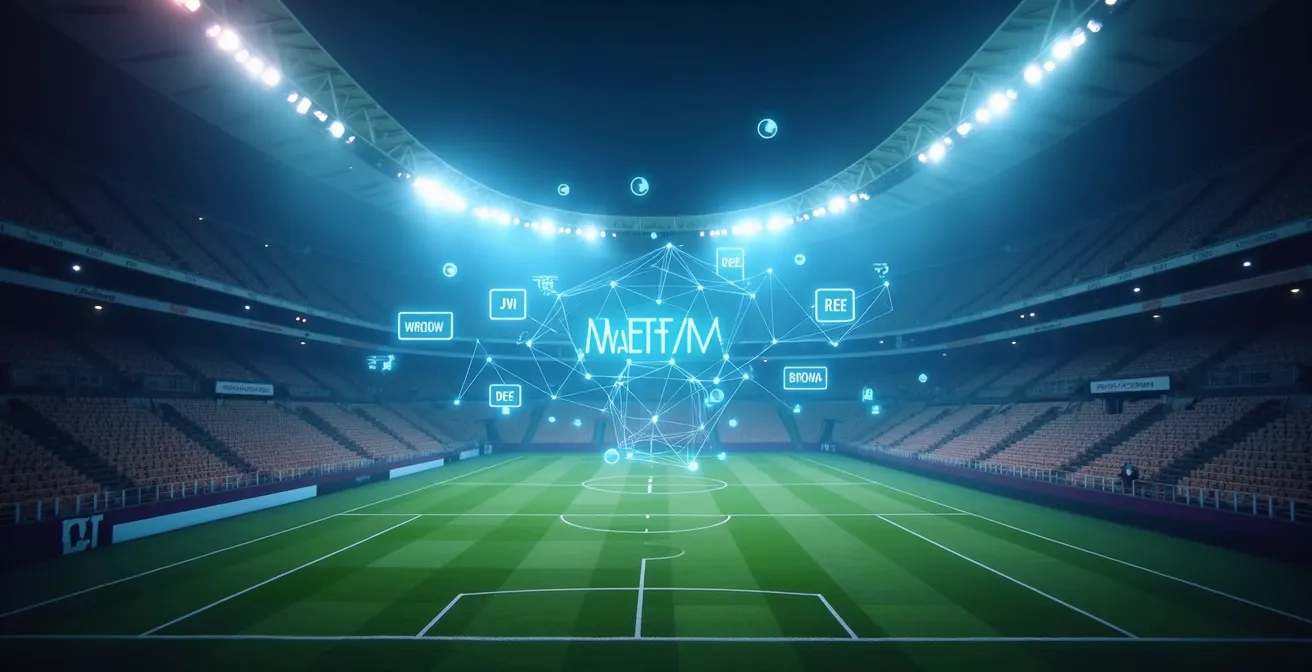
Scout reports provide qualitative context, narrative, and an expert’s intuition about a player’s potential, attitude, and fit within a team’s culture. This is invaluable information that numbers alone cannot convey. However, stats portals powered by real-time, in-game data provide objective, quantitative proof that can validate or challenge a scout’s opinion. The “Augmented Match” application developed for Orange Vélodrome in Marseille is a perfect example. It uses 5G to deliver a massive amount of real-time player data—sprint speeds, distance covered, pass completion rates—directly to fans’ phones in augmented reality. This allows fans to become armchair scouts, comparing a player’s live performance against their season averages or the transfer rumors circulating online.
Ultimately, the two sources are not competitors but complements. The future of fan analysis lies in using the app as a live fact-checker for the narratives provided by pundits and scouts. Trust is best placed in a synthesis of the two: using the objective data from the app’s portal to inform your interpretation of the subjective, but crucial, insights from expert scout reports. This creates a more sophisticated, well-rounded understanding of player and team performance.
How to Convert 60,000-Seat Stadiums into Sustainable Community Hubs?
A 60,000-seat stadium is a massive piece of urban infrastructure that sits empty for the vast majority of the year. The traditional model is incredibly inefficient and environmentally taxing. The smart stadium vision extends beyond the 90 minutes of a match, re-imagining the venue as a “platform”—a year-round, sustainable community hub. The stadium app is the central operating system for this transformation, connecting the venue to local life 365 days a year.
This “360-degree” approach is central to the design of next-generation venues, like the new Buffalo Bills stadium set to open in 2026. The plan is to build a data-fueled service solution that enhances not just the gameday experience, but any concert, community festival, or local event held in the space. The app becomes the gateway for the community to interact with the venue. By integrating features that promote local engagement and sustainability, the stadium can become a positive force in its neighborhood rather than just a gameday destination.
Key app features are crucial for this pivot from an isolated fortress to an integrated community hub. These tools transform the app from a simple gameday utility into a daily touchpoint for local residents and businesses. The most effective strategies include:
- 365-Day Event Calendar: Allow users to book tours, community yoga classes, or tickets for non-matchday events directly in the app.
- Local Business Loyalty Program: Create a system where points earned at local shops and restaurants can be exchanged for merchandise discounts or ticket upgrades.
- Real-Time Sustainability Dashboard: Engage the community by showing the stadium’s live energy usage, water consumption, and recycling rates, gamifying efforts to reduce the carbon footprint.
- Public Transport Rewards: Integrate with local transit systems to offer fans discounts or loyalty points for choosing sustainable travel options.
Key Takeaways
- Connectivity is the Foundation: A seamless digital experience is impossible without robust, high-speed 5G connectivity to handle data-rich applications like AR and live streaming.
- Frictionless Design Drives Value: The biggest wins in fan experience and revenue come from eliminating friction at key touchpoints like ticketing and concessions.
- Trust is a Currency: Personalization requires data, but this value exchange only works if built on a foundation of transparency and user-controlled privacy settings.
Why Dynamic Pricing Is Making Season Tickets Unaffordable for Locals?
In the quest to maximize revenue, many organizations are turning to dynamic pricing models for tickets. Powered by sophisticated algorithms, this approach adjusts ticket prices in real-time based on factors like opponent quality, team performance, day of the week, and even the weather. From a purely commercial standpoint, it’s brilliant, ensuring that no seat is sold for less than the market is willing to pay. However, this optimization comes at a steep cultural cost: it can alienate the most loyal, local fans who form the bedrock of a team’s community.
The problem is that a die-hard local fan’s ability to pay does not fluctuate with demand. A season ticket is a commitment, a ritual, and a part of their identity. When dynamic pricing for single-game tickets drives the perceived market value so high that season ticket renewals become prohibitively expensive, it creates a deep sense of betrayal. The club appears to be prioritizing affluent, casual fans or even away supporters over its own grassroots base. This can lead to a hollowing out of the stadium’s atmosphere, replacing authentic passion with a more corporate, transient crowd.
A truly “smart” stadium must balance revenue optimization with community preservation. The app, which holds valuable data on fan loyalty and location, is the perfect tool to implement a more equitable model. Instead of a one-size-fits-all dynamic price, venues can create a tiered system. This could involve using geolocation to offer early-access sales windows for local residents, or creating loyalty-based pricing tiers that reward long-term season ticket holders with price protection. This approach still leverages data but uses it to foster loyalty rather than simply maximize short-term profit. It’s a strategic choice between optimizing a transaction and building a lifelong relationship.
To truly succeed, the next step for any venue is to start mapping this digital fan journey and identify the key moments where technology can build a deeper, more meaningful, and more equitable connection with its entire community.