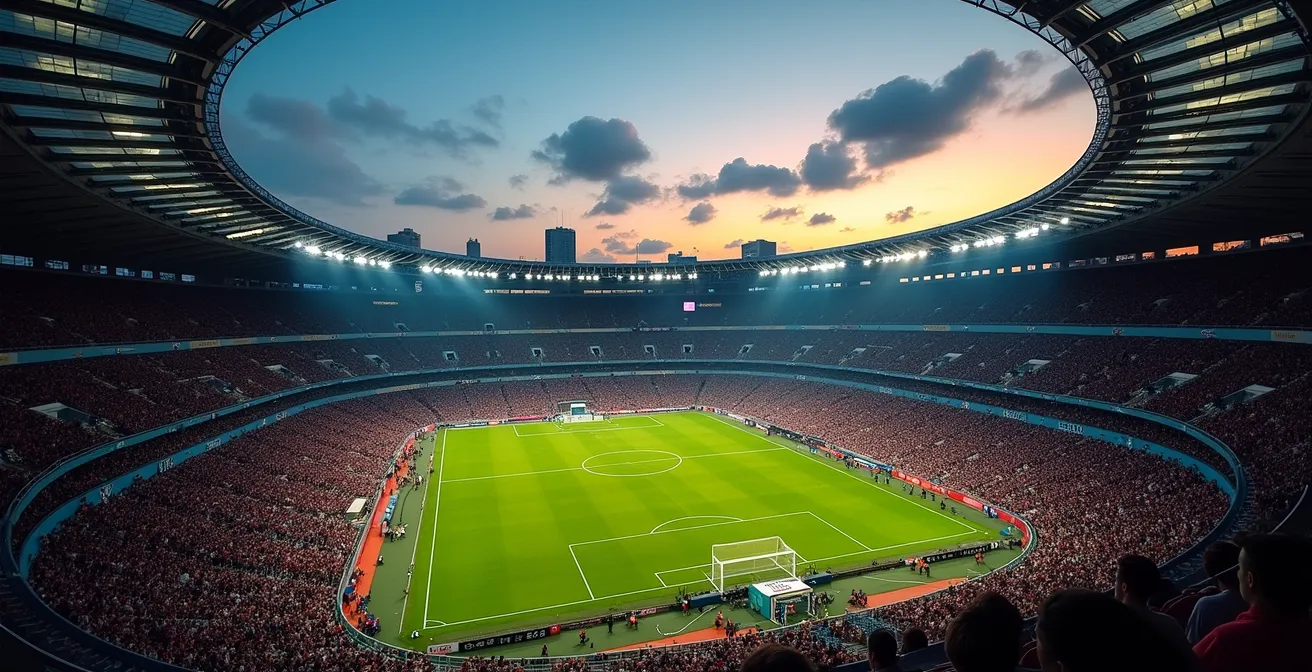
Contrary to the belief that stricter bans and heavier fines are the solution, the data shows this approach is failing to reduce pyrotechnic use and is financially damaging to clubs.
- The current punitive model ignores the deep cultural legitimacy of pyrotechnics in fan expression, leading to increased clandestine use and risk.
- Proven alternatives, such as controlled use zones and technological innovations, demonstrate that risk can be managed rather than simply prohibited.
Recommendation: Shift from a prohibition-only policy to a pragmatic risk-management framework that incorporates controlled procedures, stakeholder dialogue, and technological assessment to achieve both safety and atmosphere.
The debate over pyrotechnics in football stadiums is often trapped in a frustrating stalemate. On one side, safety authorities and regulators point to the undeniable dangers of flares, which can burn at extreme temperatures and pose significant risks. On the other, passionate fan groups argue that pyrotechnics are an inseparable part of a vibrant, intimidating stadium atmosphere that fuels their team’s performance. The standard response has been a zero-tolerance policy of bans and escalating fines, a strategy intended to stamp out the practice entirely. Yet, incident reports and financial statements tell a different story: this model is not only failing to deter pyrotechnic use but is also creating new, unmanaged risks while draining club resources.
But what if the fundamental premise of total prohibition is the flaw in the system? What if the key is not to eradicate a deeply embedded cultural practice, but to manage its associated risks? This article moves beyond the binary conflict to propose a pragmatic, regulatory approach for safety officers and fan representatives. By adopting a risk-management framework, it is possible to build a new model—one that respects the cultural expression of fans, explores technological mitigation, and implements controlled procedures to ensure that the passion of the stands does not compromise the safety of everyone within them. We will explore why the current system fails, examine viable alternatives from across Europe, and outline how a structured, evidence-based dialogue can lead to safer, more atmospheric stadiums for all.
This guide provides a detailed analysis of the key challenges and potential solutions for managing pyrotechnics in stadiums. The following sections break down the issue from multiple perspectives, from fan culture to financial impact, to build a comprehensive risk-management strategy.
Summary: A New Strategy for Pyrotechnics and Stadium Safety
- Why Fans View Flares as an Essential Part of the Matchday Expression?
- How Cold Pyrotechnics Reduce Burn Risks While Maintaining Visuals?
- Controlled Zone or Smuggled Flares: Which Approach Reduces Injury Risk?
- The Financial Error of Ignoring UEFA Fines That Deplete the Transfer Budget
- How to Time Pyro Displays to Avoid Match Stoppages Due to Visibility?
- Organized Support or Designer Clothes: Differentiating Subcultures in the Stand
- The Discipline Mistake That Results in Red Cards During Heated Copa Matches
- Acoustic Architecture: How Stadium Design Amplifies Crowd Noise Decibels?
Why Fans View Flares as an Essential Part of the Matchday Expression?
To effectively manage pyrotechnics, it is crucial to first understand their role beyond mere spectacle. For many organized supporter groups, particularly Ultras, flares are not just fireworks; they are a tool of expression with deep cultural legitimacy. These displays are a core component of “tifo” choreography, elaborate visual presentations designed to create an electric environment that simultaneously inspires the home team and intimidates opponents. This practice has historical roots, with early Italian Ultras pioneering the use of pyrotechnics to establish a powerful and unified presence in the stands. As the Original Football Substack notes in its analysis of fan culture, “The use of flares and pyrotechnics is another hallmark of Ultra culture. These elements add a dramatic and intimidating atmosphere to the stadium.”
Ignoring this cultural significance is why a purely prohibitive approach often fails. When an activity is central to a group’s identity, banning it does not eliminate the desire; it merely pushes the practice underground, leading to more dangerous, unregulated use. The data supports this: in the UK, a decade of strict enforcement has not eradicated the issue. On the contrary, statistics show that between the 2010/11 and 2012/13 seasons, incidents involving pyrotechnics rose from just 8 to 172. This sharp increase demonstrates that the motivation to use flares is powerful and resilient. A successful safety strategy must therefore acknowledge this motivation and incorporate it into a risk-management framework, rather than attempting to fight a cultural battle it cannot win.
How Cold Pyrotechnics Reduce Burn Risks While Maintaining Visuals?
As part of a modern risk-management framework, exploring technological mitigation is a critical step. “Cold” pyrotechnics represent one of the most promising innovations in this area. These devices are engineered to produce a similar visual effect to traditional flares but with significantly reduced thermal risk. While the term “cold” is relative—they are not cold to the touch—they operate at far lower temperatures. Trials have shown that cold pyrotechnics burn at temperatures over 1,000 degrees Celsius lower than conventional flares, drastically reducing the risk of severe burns and the ignition of surrounding materials like clothing or flags.
This paragraph introduces a concept complex. To understand it well, it is useful to visualize its main components. The illustration below breaks down this process.

As the image suggests, these devices are the result of specific engineering designed for greater safety. European clubs have already begun exploring this technology. Brøndby IF in Denmark, a club frequently fined for traditional pyro use, has been a pioneer in developing and testing cold flare prototypes. While their early findings noted that fans still prefer the raw effect of traditional flares and that smoke production remains a concern, the initiative demonstrates a proactive approach. It proves that clubs and tech developers can collaborate to create alternatives that maintain a visual spectacle while fundamentally lowering the physical danger, a key goal for any safety officer.
Controlled Zone or Smuggled Flares: Which Approach Reduces Injury Risk?
The core of a pragmatic safety policy lies in control, not absolute prohibition. The current system, which forces fans to smuggle pyrotechnics into stadiums, inherently increases risk. Concealed flares cannot be inspected, their users are not trained, and they are often deployed in densely packed, unsuitable areas. A Controlled Use Protocol offers a dramatically safer alternative. This model involves designated, pre-approved zones where trained fans can use inspected pyrotechnics under the supervision of safety personnel. This approach is not theoretical; it has been successfully implemented. In Norway, a legal framework for pyro shows has yielded remarkable results, with one season seeing 80 legal displays with zero reported injuries.
This success stands in stark contrast to the failing punitive model. As Schalke chairman Matthias Tillmann stated, the current system of fines is ineffective: “Simply saying that clubs have to pay a certain amount per flare that is lit obviously does not lead to fewer pyrotechnics being set off.” The data confirms his assessment. In Germany, despite clubs being fined millions, police noted a 73% increase in pyrotechnics incidents in a single season. This demonstrates that when faced with a choice between uncontrolled, illegal use and a complete absence of atmosphere, many fans will choose the former. A controlled zone model breaks this dangerous binary, offering a third way that channels the desire for expression into a managed, and therefore safer, procedure. It transforms the relationship between fans and authorities from adversarial to collaborative, focusing on a shared goal of safety.
Action Plan: Auditing Stadium Readiness for a Controlled Pyro Trial
- Identify Potential Zones: Pinpoint areas with clear sightlines, non-combustible surfaces, and good ventilation, away from family sections and disabled access areas.
- Assess Fan Group Cooperation: Open dialogue with recognized supporter groups to gauge their willingness to participate in a structured, regulated trial.
- Review Emergency Protocols: Ensure fire suppression equipment (extinguishers, fire blankets) and trained medical staff are immediately accessible to the proposed zone.
- Consult Local Authorities: Engage with fire and police services to review the proposed protocol and ensure it aligns with local public safety ordinances.
- Develop a User Agreement: Draft a clear set of rules for participating fans, covering device types, timing, handling procedures, and clear consequences for violations.
The Financial Error of Ignoring UEFA Fines That Deplete the Transfer Budget
Beyond the safety debate, there is a stark financial reality to the current punitive system. The financial inefficiency of the “ban and fine” model should be a major concern for club executives and safety officers alike. These are not trivial penalties; they represent a significant and predictable drain on a club’s resources that could otherwise be invested in players, facilities, or community programs. In the 2024-25 season alone, German clubs were hit with a staggering €12 million in total fines for pyrotechnics violations. This money effectively vanishes from the sport with no discernible improvement in safety or reduction in incidents.
The following table, compiled from German Football Federation (DFB) data, illustrates how these fines are distributed across different tiers of football, impacting clubs at all levels.
| Club | Fine Amount | Division |
|---|---|---|
| FC Cologne | €924,355 | Bundesliga |
| Eintracht Frankfurt | €764,600 | Bundesliga |
| SV Hamburg | €623,555 | 2. Bundesliga |
| Dynamo Dresden | €428,460 | 3. Liga |
For a single club, the costs accumulate quickly. Rangers FC, for example, was fined €13,750 by UEFA for one incident, in addition to a €19,000 fine for a similar offense in a previous match. While these sums may seem manageable for a large club, they are merely a warning. Repeated offenses can lead to much more severe sanctions, including partial or full stadium closures, which carry devastating financial and sporting consequences. This recurring cycle of offense, fine, and re-offense is a financially unsustainable model. A risk-management approach that reduces incidents through control, rather than simply punishing them after the fact, offers a path to breaking this costly and ineffective loop.
How to Time Pyro Displays to Avoid Match Stoppages Due to Visibility?
A key operational challenge posed by pyrotechnics, especially smoke bombs, is the impact on visibility. Thick smoke can obscure the pitch, forcing match stoppages that disrupt the flow of the game and frustrate players, broadcasters, and the majority of fans. A controlled use protocol must therefore include strict rules on the timing and placement of any display. Displays should be confined to pre-match moments, half-time, or coordinated post-goal celebrations where a brief, contained visual effect does not interfere with active play. Prohibiting use during the run of play is a non-negotiable component of any pragmatic agreement.
The issue of visibility is not merely one of inconvenience; it is a serious health and safety concern. The smoke from flares is not harmless water vapor. As a UEFA-commissioned independent explosives expert, Dr. Tom Smith, warns, the chemical composition is a significant risk. He states:
If you let off 10 average pyrotechnics in a stand and look at the sulphur dioxide and nitrogen dioxide levels that are created in the area where they are lit, they are 10,000 times the permitted levels.
– Dr Tom Smith, UEFA Independent Explosives Expert Report
This extreme concentration of toxic gases poses a direct respiratory risk to everyone in the immediate vicinity, especially those with pre-existing conditions like asthma. Therefore, any controlled use must take place in well-ventilated areas, and the number of devices used simultaneously must be strictly limited. Timing a display to avoid match stoppages is not just about keeping the game moving; it’s a fundamental part of a system designed to mitigate genuine health risks.
Organized Support or Designer Clothes: Differentiating Subcultures in the Stand
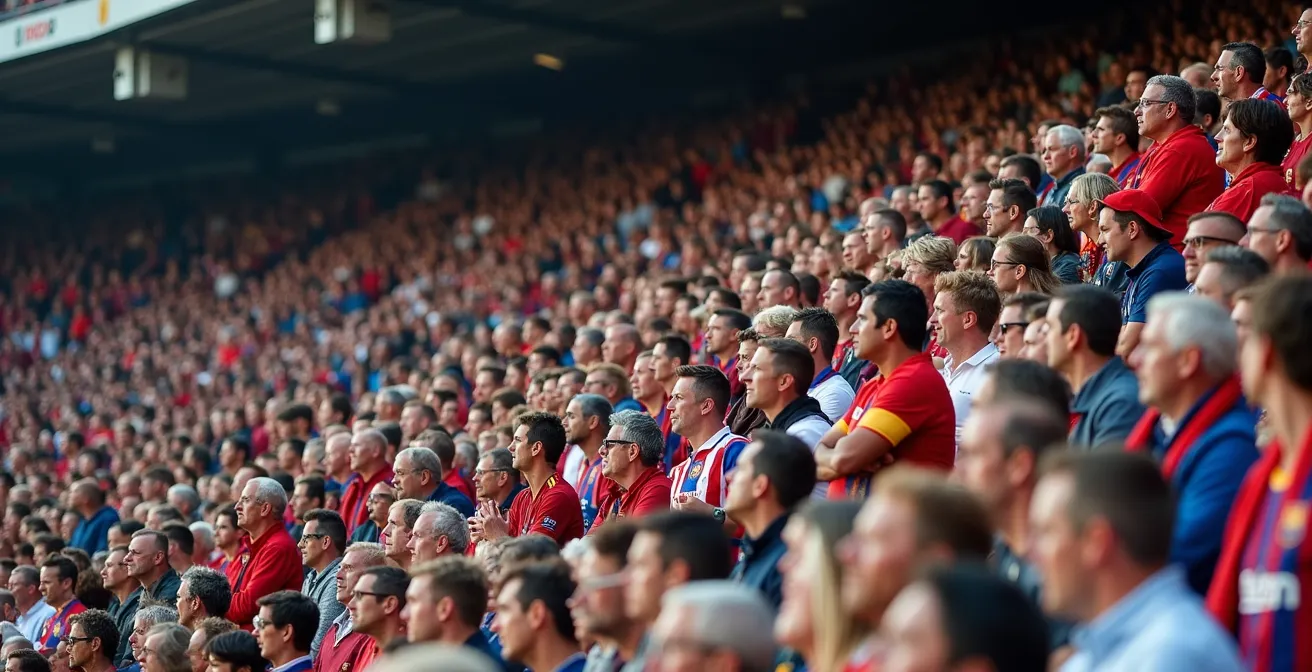
A frequent mistake in stadium management is treating “the fans” as a single, monolithic entity. In reality, a stadium is a complex ecosystem of distinct fan subcultures, each with different motivations, expectations, and relationships with pyrotechnics. Effective dialogue and policy-making require recognizing these differences. The organized Ultras in a safe-standing section, adorned in coordinated club colors and dedicated to creating choreographed atmosphere, have a different perspective than families in a designated seating area or corporate guests in premium seats. Lumping them all together under one policy is bound to fail.
This paragraph highlights the diversity of fan groups and their different roles within the stadium experience, a concept visually reinforced by the image below.
Furthermore, even within “Ultra” culture itself, there is significant diversity and evolution. A powerful example comes from Greece, where the Olympiacos ultras, known as Gate 7, have been at the forefront of an anti-pyro campaign. Following a tragic flare-related fatality, the group now actively promotes a “No flares, no pyrotechnics, just atmosphere” message before major games. Their stance, rooted in a deep respect for safety born from a past stadium disaster, shows that even the most passionate groups can prioritize safety without sacrificing intensity. This case study shatters the stereotype that all organized groups are inherently pro-pyro, proving that dialogue can reveal shared values and lead to fan-led safety initiatives.
The Discipline Mistake That Results in Red Cards During Heated Copa Matches
While the title suggests a focus on on-field discipline, the most significant “discipline mistake” for a fan is misjudging the real-world legal consequences of using pyrotechnics. For an individual, the stakes are far higher than a club fine. Getting caught with a flare or smoke bomb can lead to life-altering criminal sanctions. The idea that it’s a minor infraction is a dangerous misconception. In the UK, the legal response has been hardening, with arrest numbers reflecting this trend. During the 2012/13 season alone, there were 71 arrests for ‘Possession of a Firework/Flare at a Sporting Event’, a sharp increase that highlights the growing legal jeopardy for supporters.
These arrests are not just a matter of being escorted from the stadium. They can, and do, lead to severe penalties. Case law provides sobering examples of the consequences. For instance, two Chelsea fans caught taking smoke bombs into a stadium were sentenced to 28 days in jail and received six-year football banning orders, with their appeal being rejected. A Manchester United fan received a suspended two-month jail term and a three-year ban for setting off a single smoke bomb. These are not just warnings; they are criminal records that can impact employment, travel, and future prospects. The personal discipline mistake is failing to weigh a fleeting moment of expression against the very real possibility of a criminal conviction, a lengthy ban from the sport they love, and even a prison sentence.
Key takeaways
- The current “ban and fine” model is financially costly and ineffective at reducing pyrotechnic incidents.
- A risk-management framework, focusing on control rather than prohibition, offers a more pragmatic and safer path forward.
- Understanding fan culture, embracing technological innovation, and learning from successful controlled-use models are essential components of a modern safety strategy.
Acoustic Architecture: How Stadium Design Amplifies Crowd Noise Decibels?
Finally, it’s important to contextualize pyrotechnics as just one element of stadium atmosphere. The most powerful and sustainable source of atmosphere is the collective voice of the crowd, and this can be significantly influenced by acoustic architecture. Modern stadium design increasingly focuses on how to capture, reflect, and amplify crowd noise to create an intense and intimidating cauldron of sound. Hard surfaces like concrete and steep-raked steel stands act as massive acoustic reflectors, bouncing sound waves back toward the pitch and around the bowl. The design of the roof is particularly critical. A low, cantilevered roof can trap sound, preventing it from escaping and focusing it onto the playing area.
Iconic venues are famous for this engineered advantage. Borussia Dortmund’s Signal Iduna Park, home to the “Yellow Wall,” is a prime example. This single, massive terrace for nearly 25,000 standing fans creates a unique acoustic and visual force. Similarly, Munich’s Allianz Arena was designed with acoustics in mind. Architectural analysis notes that despite its large size, the stadium which holds over 75,000 spectators maintains an intense, unified acoustic field, largely due to the curvature and overhang of its roof. This demonstrates that a truly formidable atmosphere is built on more than just visual effects. For clubs and safety officers, investing in and understanding their stadium’s acoustic properties is a long-term strategy for enhancing the matchday experience in a way that is both safe and deeply impactful.
By moving beyond a simplistic prohibition model and embracing a multi-faceted risk-management framework, stadium authorities and fan representatives can forge a new path. This approach acknowledges the cultural drivers of fan expression, leverages technology to mitigate danger, and implements controlled procedures that have been proven to work. It is a strategy that protects clubs from financial drain and, most importantly, enhances the safety of all spectators without extinguishing the passion that makes football the world’s most popular sport. The choice is not between a dangerous spectacle and a sterile environment; it is between an unmanaged risk and a controlled one. For the future of stadium safety and atmosphere, the latter is the only logical choice.