Players and teams
Whether you’re watching a thrilling basketball game, participating in a recreational soccer league, or competing in an esports tournament, the interplay between individual players and cohesive teams forms the foundation of competitive success. Understanding this relationship isn’t just valuable for athletes and coaches—it enriches the experience for spectators, casual participants, and anyone fascinated by the mechanics of competition.
The dynamics between talented individuals and effective team structures reveal universal principles that apply across virtually every sport and competitive game. From the specialized roles that players occupy to the invisible chemistry that transforms a group of skilled individuals into a dominant force, these elements determine outcomes at every level of play. This comprehensive exploration will equip you with the knowledge to appreciate what separates good players from great ones, and functional teams from championship-caliber units.
What Distinguishes Individual Talent From Team Success?
A common misconception suggests that assembling the most talented individual players automatically creates the best team. Reality proves far more nuanced. Individual excellence encompasses technical skills, physical attributes, mental resilience, and decision-making abilities that a player demonstrates independently. A striker who consistently scores goals, a point guard with exceptional ball-handling, or a skilled support player in a multiplayer online game all exhibit individual talent.
Team success, however, requires something beyond the sum of individual capabilities. It emerges when players complement each other’s strengths, compensate for weaknesses, and operate within a cohesive system. History offers countless examples of star-studded lineups underperforming while less individually talented teams achieve remarkable results through superior coordination and shared purpose.
The most successful competitive environments balance both elements. They recruit players with strong individual skills while simultaneously fostering the culture, communication patterns, and strategic frameworks that enable true collaboration. This balance explains why some franchises consistently build winning teams across different player generations, while others struggle despite significant resources.
Essential Player Roles and Positional Responsibilities
Nearly every team-based activity distributes responsibilities across specialized positions, each requiring distinct skill sets and tactical understanding. This specialization allows players to develop deep expertise in specific areas while contributing to the overall team strategy.
Offensive and Defensive Specialists
Many sports divide roles between those primarily responsible for scoring and those focused on preventing opponents from scoring. In football, strikers concentrate on finishing opportunities while defenders protect their goal. Basketball features guards who handle playmaking and forwards/centers who dominate near the basket. Even in games like chess team competitions or relay races, participants assume different strategic or physical responsibilities based on their strengths.
Playmakers and Support Roles
Beyond scoring and defending, successful teams require playmakers who orchestrate strategy, distribute responsibilities, and create opportunities for teammates. A quarterback in American football, a point guard in basketball, or a midfielder in soccer fulfills this crucial function. Similarly, support players—those who may not dominate statistics but enable others to excel—prove indispensable. These individuals set screens, make crucial defensive rotations, or provide communication that keeps everyone synchronized.
Understanding positional responsibilities helps fans appreciate the full complexity of competition and assists players in identifying where their natural abilities fit within team structures. The most versatile athletes can adapt across multiple roles, providing tactical flexibility that coaches highly value.
How Do You Build Effective Team Composition?
Constructing a balanced roster requires strategic thinking that extends beyond simply acquiring the best available talent. Team composition considers how different player types interact, ensuring the collective unit functions smoothly under various competitive scenarios.
Successful team building typically addresses these fundamental considerations:
- Skill diversity: Combining players with complementary abilities rather than redundant strengths
- Experience balance: Mixing veterans who provide leadership and composure with energetic newer players who bring fresh perspectives
- Personality compatibility: Ensuring individual temperaments and work ethics align with team culture
- Physical and tactical variety: Creating matchup advantages through different playing styles and attributes
In recreational contexts, effective composition might mean ensuring your weekend volleyball team has both powerful hitters and skilled setters, or that your gaming squad includes players comfortable with aggressive and defensive strategies. At professional levels, general managers and coaches invest countless hours analyzing how prospective additions will mesh with existing personnel, sometimes prioritizing cultural fit over marginally superior skills.
The chemistry that emerges from thoughtful composition often proves more valuable than raw talent accumulation. Teams where players genuinely understand and trust each other’s decision-making respond more effectively under pressure and adapt more fluidly to changing competitive circumstances.
Leadership Dynamics and Team Management
Every successful team features leadership structures—both formal and informal—that guide collective behavior and maintain standards. These structures typically operate on multiple levels simultaneously.
Coaching and External Leadership
Coaches, managers, and coordinators provide strategic direction, design training programs, make tactical adjustments during competition, and shape overall team culture. Effective coaches balance technical expertise with interpersonal skills, knowing when to demand more from players and when to provide encouragement. Their ability to communicate complex strategies clearly and adapt game plans to opponent tendencies often determines competitive outcomes as significantly as player execution.
Team Captains and Player Leadership
On-field or in-game leadership typically falls to designated captains or veteran players who command respect from teammates. These individuals set standards through their own preparation and performance, communicate during competition when coaches cannot directly intervene, and often serve as bridges between coaching staff and players. The best player-leaders possess both vocal leadership—the ability to motivate and direct teammates explicitly—and leadership by example, where their work ethic and composure inspire emulation.
Teams lacking clear leadership frequently struggle with accountability, communication breakdowns during critical moments, and difficulty maintaining focus over long competitive seasons. Conversely, strong leadership cultures create environments where expectations remain high, conflicts resolve constructively, and collective goals supersede individual interests.
Cultivating Team Chemistry and Cohesion
Perhaps the most mysterious yet vital element of team success, chemistry describes the intangible connection that allows players to anticipate each other’s movements, trust each other’s decisions, and function as a unified entity. While partially organic, chemistry can be deliberately cultivated through specific practices.
Factors that contribute to strong team chemistry include:
- Shared experiences: Training together, overcoming adversity as a unit, and celebrating successes builds bonds that translate into on-field trust
- Clear communication protocols: Establishing how players signal intentions, provide feedback, and resolve disagreements prevents misunderstandings
- Defined roles and expectations: When everyone understands their responsibilities and how they contribute to team objectives, friction decreases
- Mutual accountability: Creating culture where players hold each other to standards rather than relying solely on coaches
Teams with exceptional chemistry often perform beyond their apparent talent level because players make each other better. A striker who trusts that teammates will make certain passes begins making runs they might otherwise hesitate to attempt. A defensive player who knows their partner will cover specific assignments can take calculated risks that create turnovers.
Developing chemistry requires time—the reason newly assembled teams often struggle early despite talent while long-standing groups demonstrate seamless coordination. Smart organizations protect core groups when possible, understanding that continuity offers competitive advantages that outweigh marginal individual upgrades.
Measuring Individual and Team Performance
Modern sports and competitive gaming increasingly rely on performance metrics to evaluate both individual contributions and team effectiveness. These measurements provide objective frameworks for assessing progress, identifying improvement areas, and making strategic decisions.
Individual statistics track specific contributions: points scored, assists made, defensive stops, accuracy percentages, or completion rates. Advanced metrics attempt to capture context, measuring efficiency rather than raw totals and accounting for opponent quality and situational factors. A player averaging moderate scoring totals might prove more valuable than higher-volume scorers when efficiency and defensive impact factor into evaluation.
Team metrics examine collective performance: offensive and defensive efficiency ratings, possession statistics, turnover differentials, or win-loss records against various opponent types. The most sophisticated analyses identify patterns—how specific player combinations perform together, how teams respond after timeouts, or which tactical approaches prove most effective in particular situations.
While metrics provide valuable insights, they cannot capture everything that contributes to success. Intangibles like leadership, composure under pressure, or the willingness to make sacrifices for team benefit resist quantification yet profoundly impact outcomes. The most effective evaluation approaches combine statistical analysis with informed observation, recognizing both what numbers reveal and their limitations.
Understanding the relationship between individual players and cohesive teams deepens appreciation for competitive activities at every level. Whether you’re building your own recreational team, analyzing professional competitions, or simply enjoying sports and games as entertainment, recognizing how talent, roles, chemistry, and leadership interact illuminates what separates ordinary performance from extraordinary achievement. The principles governing these dynamics remain remarkably consistent across different competitive contexts, offering frameworks that enhance both participation and observation.
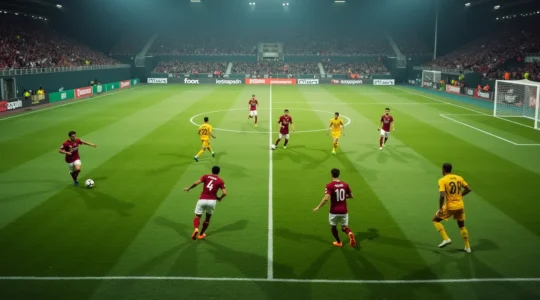
False 9 or Target Man: Which Centre-Forward Style Suits Possession Football Better?
The debate isn’t about choosing a False 9 or a Target Man; it’s about understanding the modern striker as a tactical system designed to manipulate space and enable possession. Dropping deep isn’t just a movement; it’s a strategic tool to…
Read more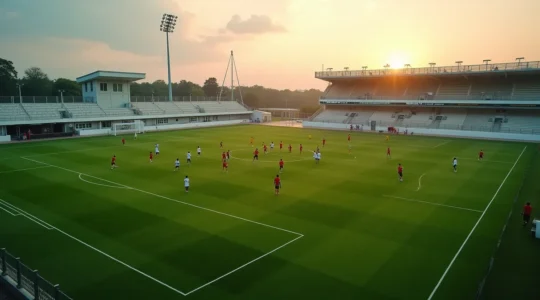
How Do National Squads Build Chemistry with Only 10 Days of Preparation?
Building elite national team chemistry is not an art; it is a science of controlled cognitive and physiological management. Success in a 10-day window hinges on minimizing cognitive load, not on implementing complex tactical systems. True cohesion is achieved through…
Read more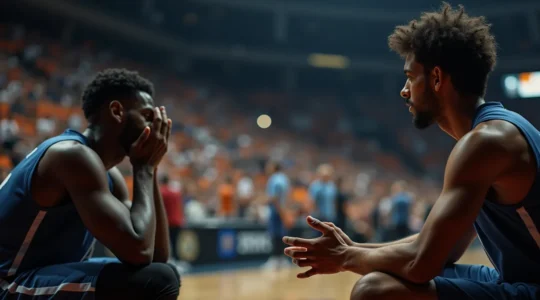
Why Elite Rosters Struggle with Harmony When Too Many Stars Want Playing Time?
The performance of a star-studded team isn’t about managing individual egos, but about designing an environment where the collective goal is more rewarding than individual status. Success hinges on establishing clear ‘psychological contracts’ about roles before conflict arises. Strategic rotation…
Read more
How Managers Select Starting Squads for High-Pressure Derby Matches?
Elite squad selection is not about picking the best 11 players; it’s a calculated act of managing a psychological portfolio where every choice impacts the entire squad’s ecosystem. Inconsistency in selection is the single biggest destroyer of a manager’s credibility…
Read more