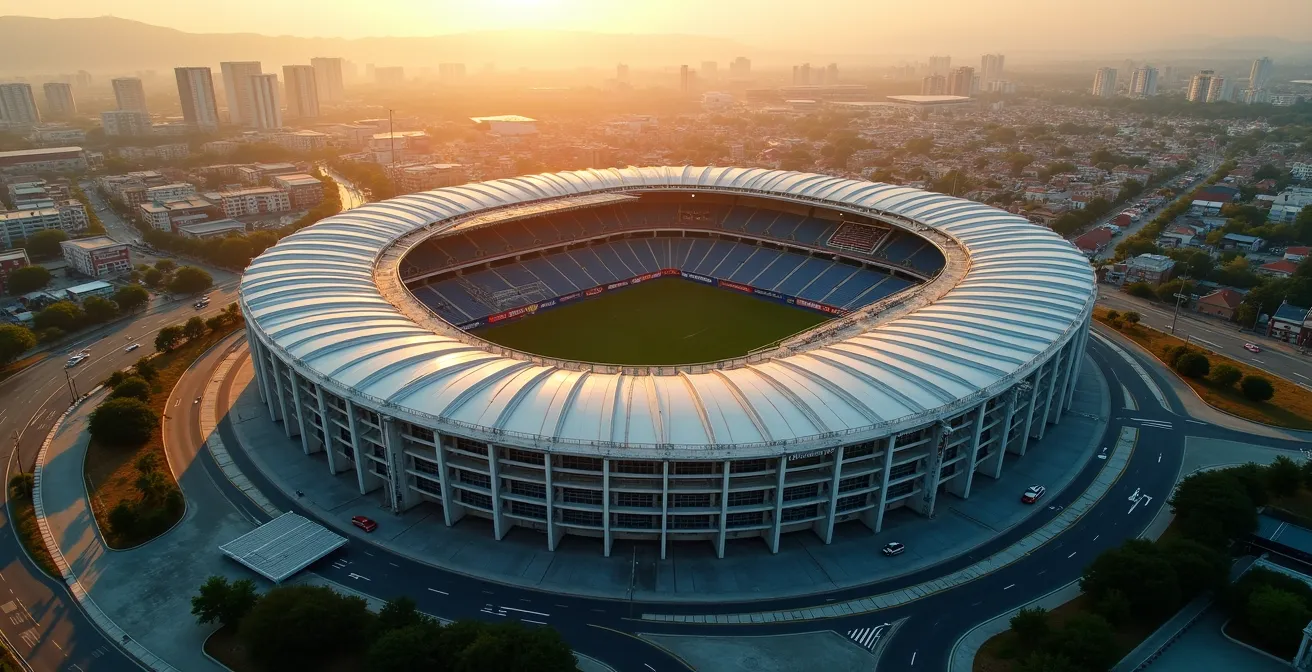
The long-term success of a World Cup’s infrastructure has little to do with the tournament itself and everything to do with its integration into a pre-existing, long-term urban strategy.
- Successful hosts use the event as a catalyst for needed upgrades (Germany 2006), while failures build event-specific venues that become financial burdens (Brazil 2014).
- True legacy planning must begin years before a bid is even submitted, aligning mega-event requirements with local community needs.
Recommendation: Treat FIFA’s requirements as a negotiating point within a 20-year city master plan, not as a rigid, non-negotiable checklist.
The confetti settles, the television cameras move on, and the roar of the crowd fades into memory. For the host nation of a FIFA World Cup, this is when the real game begins: the decades-long challenge of ensuring that billions of dollars invested in concrete, steel, and transportation do not become a monument to a month of glory, but a living, breathing asset for generations. The global spotlight often comes with the promise of a massive economic windfall and an instant upgrade to world-class facilities. Many urban planners and government officials stake their reputations on this assumption, viewing the tournament as a shortcut to modernization and prosperity.
However, the history of mega-events is littered with cautionary tales of staggering debt, underused venues, and promised benefits that never trickled down to the local population. What if the key to a successful legacy lies not in the spectacle of the event itself, but in the quiet, methodical integration of its infrastructural demands into a city’s pre-existing DNA? This consultant’s analysis shifts the focus from the 30-day tournament to the 30-year legacy, arguing that the World Cup should be a catalyst for a long-term vision, not the sole objective.
This article provides an economic and realistic framework for sports economists and urban planners. We will dissect why the projected economic boom often fails to materialize, analyze strategies for converting massive stadiums into sustainable community assets, and compare divergent hosting models to identify the critical success factors. Ultimately, we will pinpoint the precise moment when legacy planning must begin to avoid the most common and costly budgeting mistakes.
Summary: The True Legacy of World Cup Infrastructure
- Why the Economic Boost of a World Cup Often Fails to Materialize for Locals?
- How to Convert 60,000-Seat Stadiums into Sustainable Community Hubs?
- Germany 2006 vs Brazil 2014: Which Hosting Strategy Benefited the Population?
- The Budgeting Mistake That Leaves Host Cities in Debt for 20 Years
- When to Begin the Legacy Planning Phase for a Major Tournament?
- How to Build a Fanbase in Asia Without Playing a Single Home Game There?
- Rule Maker or Tournament Organizer: Who Actually Controls the Laws of the Game?
- How Historic Cities Preserve Footballing Heritage While Modernizing Stadiums?
Why the Economic Boost of a World Cup Often Fails to Materialize for Locals?
One of the primary justifications for the colossal public expenditure on a World Cup is the promise of a significant economic uplift, driven largely by tourism. However, post-event analysis frequently reveals a stark gap between projections and reality. The anticipated flood of high-spending international fans often turns out to be a more modest stream, while the “crowding out” effect can deter regular tourists who wish to avoid the expense and congestion. For example, research shows South Africa 2010 saw 310,000 actual overseas visitors against 3.2 million projected stadium attendees, a dramatic miscalculation.
This discrepancy answers the common question: “Is hosting the World Cup profitable?” For many locals, the answer is no. The jobs created are often temporary, low-wage positions in hospitality and construction, which disappear shortly after the final match. Furthermore, the focus on event-specific infrastructure can divert massive public funds from more pressing needs. As the AngelouEconomics Research Team notes, there are significant opportunity costs. These are funds that could have been invested in permanent infrastructure like hospitals, schools, or public transit systems that serve the community long-term, rather than on single-use stadiums.
The case of Brazil’s 2014 World Cup serves as a potent example. A staggering number of the promised urban mobility projects—intended as a core legacy benefit—were either unfinished or abandoned. Only 36 of 93 major infrastructure projects were completed on time. This failure demonstrates a critical flaw in event-driven planning: when short-term tournament deadlines conflict with long-term strategic goals, it is almost always the sustainable local benefit that is sacrificed, leaving residents with disruption but little to no lasting reward.
How to Convert 60,000-Seat Stadiums into Sustainable Community Hubs?
The most visible and costly artifacts of a World Cup are its stadiums. Without a clear post-tournament plan, these colossal structures can quickly become “white elephants”—architectural marvels that are financially unsustainable and functionally obsolete. A 60,000-seat stadium requires immense expenditure on maintenance, security, and utilities, costs that are impossible to cover without a permanent, high-drawing tenant like a top-tier football club. So, what happens to World Cup stadiums after the event? For cities without such a club, the answer is often decay and debt.

The solution lies in a radical shift in design philosophy: from permanent monuments to modular and adaptable systems. The groundbreaking design of Stadium 974 for the Qatar 2022 World Cup, constructed from shipping containers, offers a blueprint for this future. Its core innovation is not just its temporary nature, but its planned post-tournament disassembly and redeployment. This approach, known as “design for disassembly,” ensures the initial investment has a second life. Instead of one giant, empty venue, the components can be repurposed to meet diverse, smaller-scale community needs.
This strategy of modular legacy moves beyond simple demolition. The materials from a single large stadium can be transformed into a variety of valuable community assets. A successful conversion plan might include the following possibilities:
- Build a 15,000-seat stadium from demounted components for a local team.
- Create two athletics tracks with side stands for schools and public use.
- Construct an indoor multi-sports pavilion for year-round activities.
- Develop an Olympic-sized swimming pool pavilion.
- Establish an outdoor tennis complex or other recreational facilities.
By planning for this “second life” from the outset, cities can ensure that the stadium investment serves the public for decades, transforming a potential liability into a network of functional and vibrant community hubs.
Germany 2006 vs Brazil 2014: Which Hosting Strategy Benefited the Population?
The long-term success of a World Cup’s infrastructure is not accidental; it is the direct result of a nation’s strategic approach. The stark contrast between the outcomes of Germany 2006 and Brazil 2014 provides a masterclass in best and worst practices. Germany treated the tournament as a catalyst to accelerate pre-existing development goals, while Brazil pursued an event-driven model that prioritized FIFA’s requirements over sustainable local needs. This difference is the key to understanding which country benefited most from hosting.
Germany’s strategy was rooted in leveraging its existing football culture. Rather than building an entirely new set of stadiums, it focused on renovating and modernizing venues that were already home to established Bundesliga clubs. This ensured that every stadium had a guaranteed post-tournament tenant and a consistent revenue stream to cover maintenance. Brazil, on the other hand, constructed several new stadiums in cities without top-division teams, such as Manaus and Cuiabá, creating venues with no viable long-term purpose. A comparative analysis, such as the one from Lynchburg University’s economic research, highlights these critical differences.
| Aspect | Germany 2006 | Brazil 2014 |
|---|---|---|
| Total Cost | €4.2 billion | $15 billion |
| Infrastructure Completion | All stadiums built before tournament | 36 of 93 projects finished |
| Stadium Strategy | Renovated existing Bundesliga venues | Built new stadiums including 4 cities with no top division teams |
| Legacy Planning | Federal structure with club tenants | Stadiums without permanent tenants (e.g., Manaus) |
| Annual Maintenance | Covered by club revenues | $3 million/year for underused venues |
The core lesson, as one comparative infrastructure study insightfully notes, is that “Germany used the World Cup as a catalyst to upgrade existing, needed transport infrastructure. Brazil built new infrastructure primarily for the event, leading to abandoned projects where no underlying local need existed.” This fundamental distinction between using the event to serve the city versus building the city to serve the event is the single most important factor determining whether the infrastructural legacy is a dividend or a debt.
The Budgeting Mistake That Leaves Host Cities in Debt for 20 Years
The most predictable and damaging mistake in World Cup hosting is a fundamental budgeting error: focusing almost exclusively on the initial construction costs while severely underestimating or ignoring the long-term operational and maintenance (O&M) expenditures. The ribbon-cutting ceremony for a new stadium marks the beginning, not the end, of its financial life. Answering the question “How much does it cost to host the World Cup?” requires looking far beyond the initial price tag, which can run into the billions.
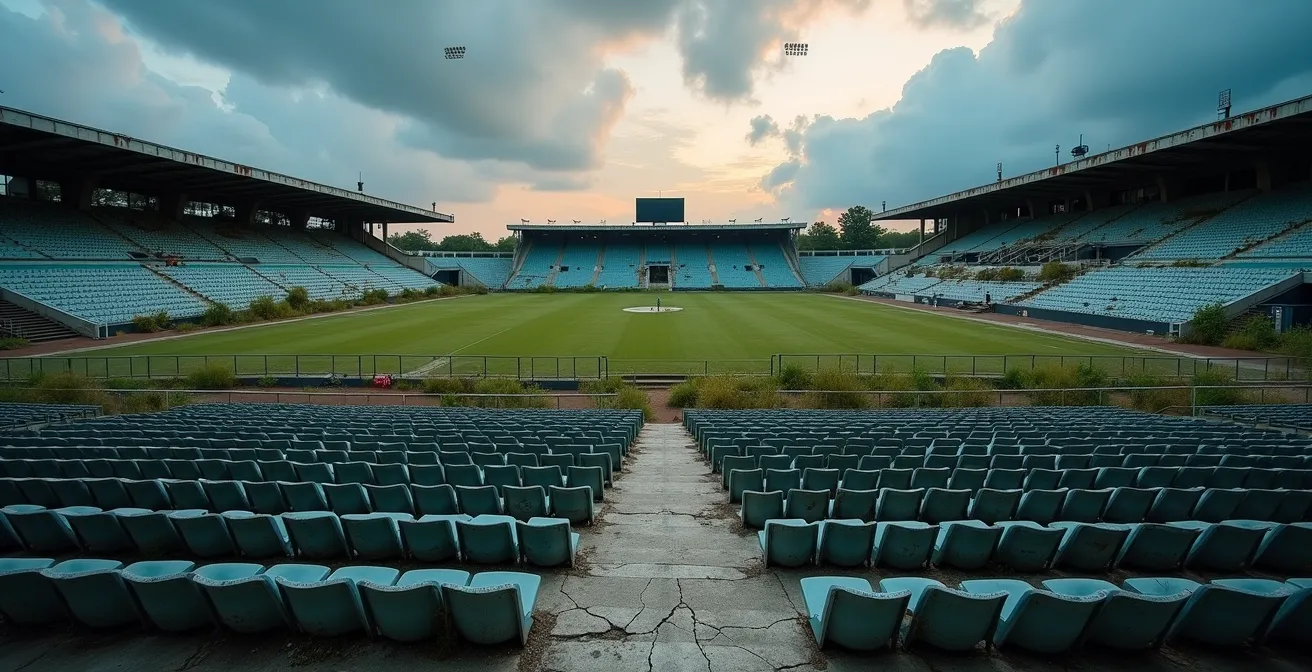
The 2002 World Cup, co-hosted by South Korea and Japan, serves as a stark warning. South Korea constructed ten new stadiums at a cost of nearly $2 billion, while Japan built seven new venues and renovated three others for at least $4 billion. In the years that followed, many of these state-of-the-art facilities struggled to find a purpose. Lacking permanent tenants and regular events, they became a drain on public finances, with annual maintenance costs running into millions of dollars per venue. This is the debt trap: the public pays to build the stadium and then continues to pay for decades just to keep it from falling into ruin.
This financial burden is a direct consequence of a “build first, ask questions later” approach. The pressure to meet FIFA’s tight deadlines often leads to a rush to build impressive structures without a viable business plan for the 20-30 years following the tournament. Urban planners and economists must insist that a comprehensive, fully-funded O&M budget is a non-negotiable component of any stadium proposal. Without it, a host city is not building a public asset; it is building a future liability that will siphon funds from essential public services for a generation.
When to Begin the Legacy Planning Phase for a Major Tournament?
For urban planners and city officials, the single most critical question is not *what* to build, but *when* to start planning for its long-term use. The common misconception is that legacy planning is a task for the later stages of preparation, or even something to be considered after the tournament is over. This is a recipe for failure. The most successful and sustainable legacies are born from a process that starts long before the world even knows a city intends to bid.
As leading urban planning research suggests, the correct answer is definitive and counter-intuitive. In a key analysis of infrastructure legacies, experts state:
The most successful legacy planning begins before the bid is even conceived. The World Cup bid should emerge from a city’s pre-existing, 20-year urban development plan.
– Urban Planning Research, Infrastructure Legacy Analysis
This principle transforms the entire hosting paradigm. The World Cup is no longer the ultimate goal; it is a strategic tool—a catalytic event used to accelerate and fund elements of a long-term master plan that the city already needs. Does the city require a new transit line to connect underserved neighborhoods? The World Cup can provide the impetus and funding. Does a district need regeneration? A new, multi-use community stadium (not a 80,000-seat behemoth) could be its anchor. This approach ensures every dollar spent serves a dual purpose: meeting FIFA’s requirements and fulfilling a genuine, pre-identified local need. This is evident in forward-looking plans, where the $594 million projected economic impact for Los Angeles County from the 2026 World Cup is tied to using existing, proven venues.
Action Plan: Auditing Your Mega-Event Legacy Plan
- Demand Analysis: Before any design, list all post-event community needs (local sports, concerts, public space) the new infrastructure must serve.
- Integration Audit: Map how each proposed venue and transport link connects with and enhances the existing 20-year urban master plan. Identify gaps.
- Financial Viability: Create a detailed 30-year operational budget for each new venue, including maintenance, staffing, and utilities. Identify a permanent anchor tenant or a multi-use revenue model.
- Modularity vs. Monument: For each structure, justify why a permanent build is superior to a modular or demountable alternative. Quantify the long-term cost difference.
- Governance Structure: Establish the public-private entity responsible for managing the legacy assets *before* construction begins, defining its funding and mandate.
How to Build a Fanbase in Asia Without Playing a Single Home Game There?
While the physical infrastructure of stadiums and transport forms the most tangible legacy of a World Cup, a host nation can also build a powerful and lasting global presence through its digital infrastructure. For a host nation, the tournament creates a state-of-the-art broadcasting and telecommunications network. This asset, if leveraged strategically, can be used to cultivate a dedicated international fanbase, particularly in massive, football-hungry markets like Asia, long after the event concludes.
Building this digital legacy means treating the World Cup’s media apparatus not as a temporary setup, but as a permanent content-generation engine. The key is to export the unique culture, expertise, and behind-the-scenes reality of the host nation’s football ecosystem. This strategy forges a direct, emotional connection with fans who may never have the chance to visit in person. The physical distance becomes irrelevant when the digital experience is immersive, exclusive, and authentic.
A host nation can leverage the infrastructure built for the World Cup in several innovative ways to engage Asian markets:
- Utilize the state-of-the-art broadcast centers built for the tournament to stream exclusive content, such as documentaries or player interviews, directly to Asian markets with local language commentary.
- Create virtual reality (VR) stadium tours and immersive match-day experiences using the 5G infrastructure installed for the event.
- Live-stream youth academy games, offering a glimpse into the future stars and the nation’s football philosophy.
- Develop metaverse versions of iconic World Cup stadiums, allowing fans to engage through gaming platforms.
- Establish certified digital training programs, exporting the host’s event management and coaching expertise to aspiring professionals in Asia.
This approach creates a sustainable, low-cost form of international influence. It recognizes that in the modern era, a fanbase is not just built in stands, but through screens. The 2002 World Cup in South Korea and Japan showed that physical infrastructure alone doesn’t guarantee a lasting connection; despite a US$2 billion stadium investment in Korea, tourism numbers remained flat. A digital-first strategy provides a far more scalable and effective path to building a global legacy.
Rule Maker or Tournament Organizer: Who Actually Controls the Laws of the Game?
From an urban planner’s perspective, the most powerful entity in the World Cup ecosystem is not the local organizing committee, but FIFA itself. While national federations manage the laws of the game on the pitch, FIFA dictates the “laws of the infrastructure” required to host. This control is exerted through a stringent and detailed bidding process, which can force host cities into making massive, and sometimes irrational, infrastructural commitments that have long-term consequences.
FIFA’s power is formalized in its bidding requirements. An investment management analysis reveals that 70% of the bidding process score depends on a city’s existing infrastructure or its committed plans for new builds. This creates immense pressure on bidders to promise bigger and better facilities, often without sufficient regard for post-tournament viability. The requirements are not suggestions; they are mandates that shape the physical landscape of a host city for decades. This power dynamic places local planners in a difficult position, caught between FIFA’s demands and the genuine needs of their communities.
The scale of these demands is significant. For example, FIFA’s own requirements stipulate that a host nation must provide a portfolio of venues with very specific capacities. According to a World Cup Infrastructure Impact Report, FIFA requires 12 stadiums that each have a minimum capacity of 40,000–80,000, depending on which matches will be played there. For many cities, a permanent 80,000-seat venue is a gross overbuild with no sustainable purpose after the tournament. However, to secure the bid, they are compelled to build it. This is where a proactive, strategic local government can make a difference—by negotiating for modular designs or proving that a renovated 60,000-seat stadium can meet the need, rather than blindly accepting the top-tier requirement.
Key Takeaways
- Plan Before You Bid: The World Cup bid must be a component of a pre-existing 20-year urban master plan, not the other way around.
- Build for the Afterlife: Prioritize renovating existing venues or using modular, demountable designs over building single-use monumental stadiums.
- Focus on Catalytic Investment: Use the event’s budget to accelerate and fund infrastructure projects (e.g., public transit, community facilities) that serve genuine, long-term local needs.
How Historic Cities Preserve Footballing Heritage While Modernizing Stadiums?
The ultimate measure of a successful infrastructural legacy is seamless integration—not just into the economic and functional fabric of a city, but into its cultural and historical identity. For cities with a deep footballing heritage, the challenge is to meet modern standards without erasing the very soul of their iconic venues. The German model for the 2006 World Cup again provides a masterclass in this delicate balancing act, demonstrating that modernization and preservation are not mutually exclusive.
Rather than razing historic grounds to build generic modern bowls, German cities like Hamburg, Cologne, and Stuttgart undertook ambitious renovations. They preserved iconic architectural elements and the intimate atmosphere of the original stadiums while upgrading facilities, safety features, and capacity. This approach honors the emotional connection fans have with their home ground, treating the stadium as a cultural landmark, not just a piece of real estate. The funding models were also diverse and strategic; in some cities like Gelsenkirchen, funding was city-led, while in others like Berlin, the Federal Government provided 100% of the World Cup-related infrastructure investments, showing a coordinated national strategy.
This commitment to heritage pays long-term dividends beyond simple nostalgia. It reinforces a sense of community ownership and pride, which in turn drives consistent attendance and engagement. Furthermore, Germany used the momentum of the World Cup to embed sustainability into its football culture. According to the “Green Goal” legacy report, the initiative spurred nationwide environmental activities, with over 400 clubs competing in environmental programs that leveraged the new infrastructure. This created a legacy that was not only physical and economic but also social and ecological. It proves that a World Cup can be a force for positive change when its infrastructure goals are aligned with a deep respect for local identity and a vision for a sustainable future.
For sports economists and urban planners, the lesson is clear: treat a World Cup bid not as a trophy to be won at all costs, but as a complex, long-term investment that demands rigorous strategic planning, a realistic economic outlook, and an unwavering focus on sustainable, community-centric design.