
Supporting a club from afar is not a lesser form of fandom; it’s an opportunity to become a vital part of its global identity.
- True connection goes beyond buying a jersey; it’s about actively building community and gaining influence.
- Digital tools have closed the distance, allowing international fans to participate in club life in unprecedented ways.
Recommendation: Shift your mindset from a passive consumer to an active “cultural ambassador” for your club in your own city.
There’s a unique ache that comes with being an international fan. You wake up at 3 AM to watch a match, your heart sinks with every goal conceded, and you celebrate victories with an unmatched passion, all while being thousands of miles from the stadium’s roar. Many believe this distance is a barrier that can only be bridged by buying the latest kit or scrolling through social media feeds. But what if that’s just scratching the surface? What if the feeling of being a “customer” could be transformed into the feeling of being “family”?
The common advice—follow players on Instagram, watch highlight reels—misses the fundamental human need for community and shared purpose. It treats fandom as a one-way street. But the landscape of sports is changing. The real magic isn’t just about watching the team; it’s about belonging to the tribe. This guide is built on a different philosophy: that true international support isn’t about passively consuming what the club offers. It’s about actively building a ‘cultural embassy’ for your club right where you are, using digital tools to transform that vast distance into genuine influence and what we call ‘digital proximity’.
Together, we’ll explore how you can move from the sidelines to the heart of the action. We will look at the psychological drivers of your passion, the practical steps to create an official fan hub, the smartest ways to support your club financially, and how to use your collective power to influence decisions at the highest level. This is your playbook for becoming an indispensable part of your club’s global story.
For those who prefer a visual format, the following video offers a powerful look into the immense scale and passion of global football fandom, perfectly complementing the practical advice in this guide.
To help you navigate this journey, we’ve structured this guide to cover every aspect of modern international fandom. From the emotional core of your support to the tangible actions you can take, here’s what we’ll cover.
Summary: A Global Fan’s Guide to True Club Connection
- Why Fans Feel Emotional Pain for a Team They Have Never Seen Live?
- How to Start an Official Supporters Club in Your City for a Foreign Team?
- Digital Membership or Merchandise: Which Supports Your Overseas Club Better?
- The Ticket Resale Scam Targeting International Fans Visiting for the First Time
- When to Book Your Trip to Ensure the Match Fixture Won’t Be Rescheduled?
- How to Build a Fanbase in Asia Without Playing a Single Home Game There?
- Why 5G Connectivity Is Now the Number One Demand for Gen Z Fans?
- How Supporter Trusts Can Influence Club Board Decisions Effectively?
Why Fans Feel Emotional Pain for a Team They Have Never Seen Live?
That gut-wrenching feeling after a loss or the pure euphoria of a last-minute winner isn’t reserved for season ticket holders. This intense emotional bond you feel, even from across an ocean, is a well-documented psychological phenomenon. It’s not strange; it’s a powerful form of connection. You are part of a massive global movement; in fact, new research reveals that 33% of football fans support a team outside of their home country. Your support is not an outlier; it’s a core part of modern football.
This connection is rooted in what psychologists call a parasocial relationship. You develop a one-sided, yet deeply meaningful, bond with the players, the manager, and the club’s identity. The club’s values become your values. Its history becomes part of your story. You invest time, emotion, and identity into the team, and that investment yields real emotional returns—and pains. The team’s narrative of struggle and triumph provides a powerful storyline that resonates with our own lives, creating a sense of shared destiny.
Case Study: The Miracle of Istanbul
The 2005 Champions League final is a perfect illustration. When Liverpool went down 3-0 to AC Milan, thousands of international fans, watching in pubs and living rooms worldwide, didn’t switch off. Their collective belief and continued support, shared across early online forums and message boards, created a wave of positivity that players later acknowledged. This demonstrates that emotional investment transcends physical presence. The fans’ belief, felt from thousands of miles away, contributed to the psychological atmosphere of one of football’s greatest comebacks, proving that your remote passion is a tangible force.
So, when you feel that pain, know that it’s a sign of a genuine connection. It’s the price of belonging to something bigger than yourself, a global family united by a shared identity. This emotional foundation is the very fuel that powers the global reach of the world’s biggest clubs.
How to Start an Official Supporters Club in Your City for a Foreign Team?
Feeling that emotional connection is the first step, but channeling it into a community is where you create a real home for your club abroad. Moving from a scattered group of individuals to an official supporters’ club transforms your collective passion into a recognized entity. This is how you build your local “cultural embassy.” It’s not just about finding a pub to watch the game; it’s about creating a physical hub that the parent club officially acknowledges. This gives you legitimacy, access, and a direct line of communication.
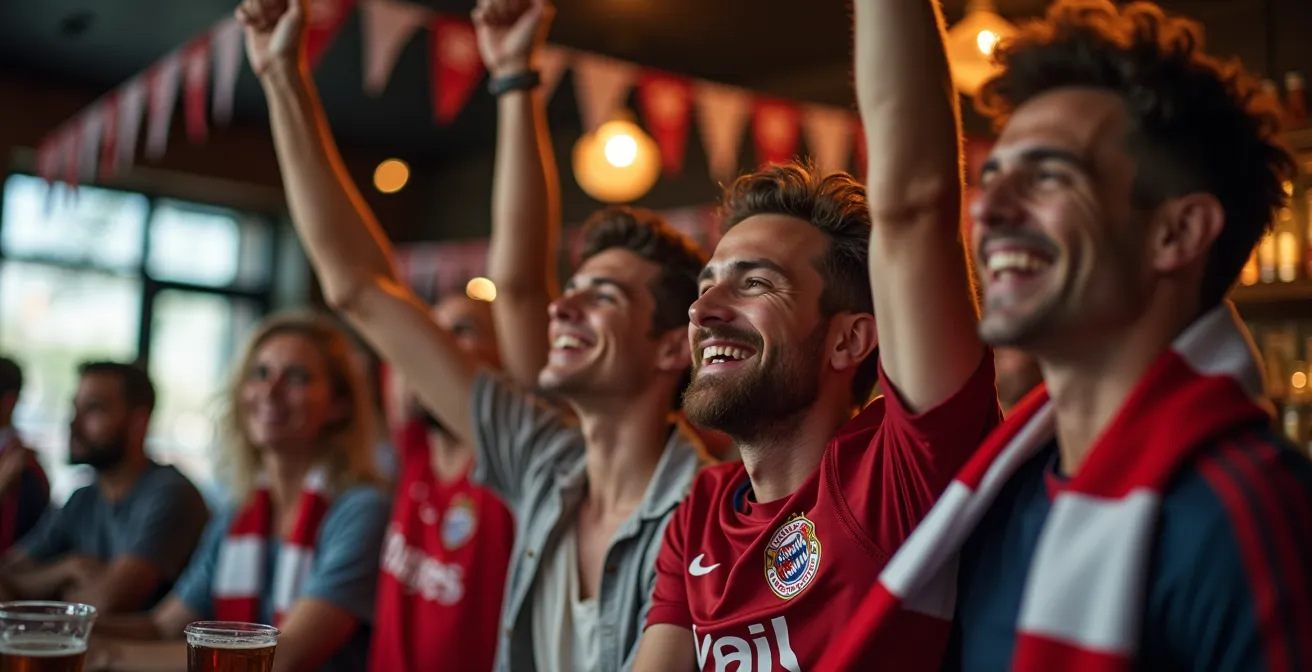
An official status can unlock benefits like priority ticket access for members who travel, exclusive content, and even visits from club legends or trophies. More importantly, it shows the club that your city is a serious outpost of support, worthy of their attention. It’s the difference between being a customer and a partner. Here is a visual representation of that vibrant community you can build.
The process requires organization and dedication, but it’s a clear pathway to establishing your group as a cornerstone of the club’s international presence. The key is to demonstrate structure, commitment, and alignment with the club’s core values.
Your 90-Day Roadmap to Official Recognition
- Research & Connect: Check the club’s official website and fan forums for existing groups in your area to avoid overlap and potentially join forces.
- Secure a Home Base: Partner with a local pub or venue to be your “home.” Negotiate for guaranteed space and screens on match days.
- Establish a Formal Structure: Create a committee with clear roles (e.g., President, Treasurer, Secretary) to show you are organized and serious.
- Draft a Code of Conduct: Write a simple charter that aligns with your parent club’s values, emphasizing inclusivity and anti-discrimination policies.
- Build Your Membership: Aim for an initial base of at least 25 committed members. Use local social media groups and football communities to find them.
- Make First Contact: Reach out to the club’s official Fan Liaison Officer (or equivalent) with a professional email introducing your group, its structure, and its activities.
- Submit Your Formal Application: Compile your evidence—photos of gatherings, meeting notes, membership list, and your code of conduct—into a formal application package.
Digital Membership or Merchandise: Which Supports Your Overseas Club Better?
As a community manager, this is one of the most common questions we get from our international family: “What’s the best way to support the club financially from afar?” The immediate answer for many is to buy the new season’s shirt. While seeing our colors worn around the world is incredible, it’s important to understand the full picture. When you want to maximize both your financial impact and your personal connection, the choice between merchandise and a digital membership becomes a strategic one.
As Alexander Dreyfus of the Chiliz Global Fan Report notes, the modern fan wants more than just a physical product. They are looking for engagement: “Virtual meet-and-greet sessions with players, fan voting on kit designs, and virtual training ground access rank amongst the key things overseas fans are looking for from their clubs.” This desire for digital proximity—the feeling of being close to the action through exclusive access—is what a digital membership is designed to deliver. A jersey shows your support publicly, but a membership often deepens it privately.
To make the best decision for you, let’s break down how each option truly benefits you and the club. The following table compares the direct financial contribution, the type of connection it fosters, and the overall value you receive.
| Aspect | Digital Membership | Merchandise Purchase |
|---|---|---|
| Direct Financial Support | Nearly 100% of the fee goes directly to the club. | Only a 20-30% profit margin typically returns to the club. |
| Cultural Connection | Grants access to exclusive content, behind-the-scenes videos, and sometimes even voting rights. | Provides a physical and visible representation of your identity as a fan. |
| Community Building | Often an individual experience, but can include access to private fan forums. | High public visibility, which can help you connect with other local fans. |
| Return on Investment | Provides ongoing digital benefits and a sense of inclusion for an entire season. | A one-time physical product that you own. |
| Annual Cost | Typically ranges from $30-100. | Can range from $80-150 per authentic item. |
Ultimately, the “better” choice depends on your goals. If your priority is to provide the most efficient financial support and gain a deeper, more interactive connection with the club’s inner workings, a digital membership is often superior. If your goal is public expression and finding fellow fans in your daily life, merchandise is invaluable. Many of the most dedicated fans do both, using the membership for their personal connection and the jersey for their public identity.
The Ticket Resale Scam Targeting International Fans Visiting for the First Time
Planning the pilgrimage to your club’s home stadium should be a dream come true. For too many international fans, however, it turns into a nightmare. The single biggest risk you face is the sophisticated world of ticket resale scams. Unofficial sellers on social media and sham websites prey on the desperation of traveling fans, charging exorbitant prices for fake or non-existent tickets. You arrive in the city, full of hope, only to be left standing outside the stadium with an invalid ticket and hundreds of dollars out of pocket.
It’s crucial to understand that for most high-demand matches, tickets are never available on general sale. They are allocated through a strict hierarchy: season ticket holders first, then official members via a lottery or loyalty-point system. Any website or social media account claiming to have a stash of tickets for a big match is almost certainly a scam. Protecting yourself requires discipline and knowledge of the only legitimate pathways to purchase.
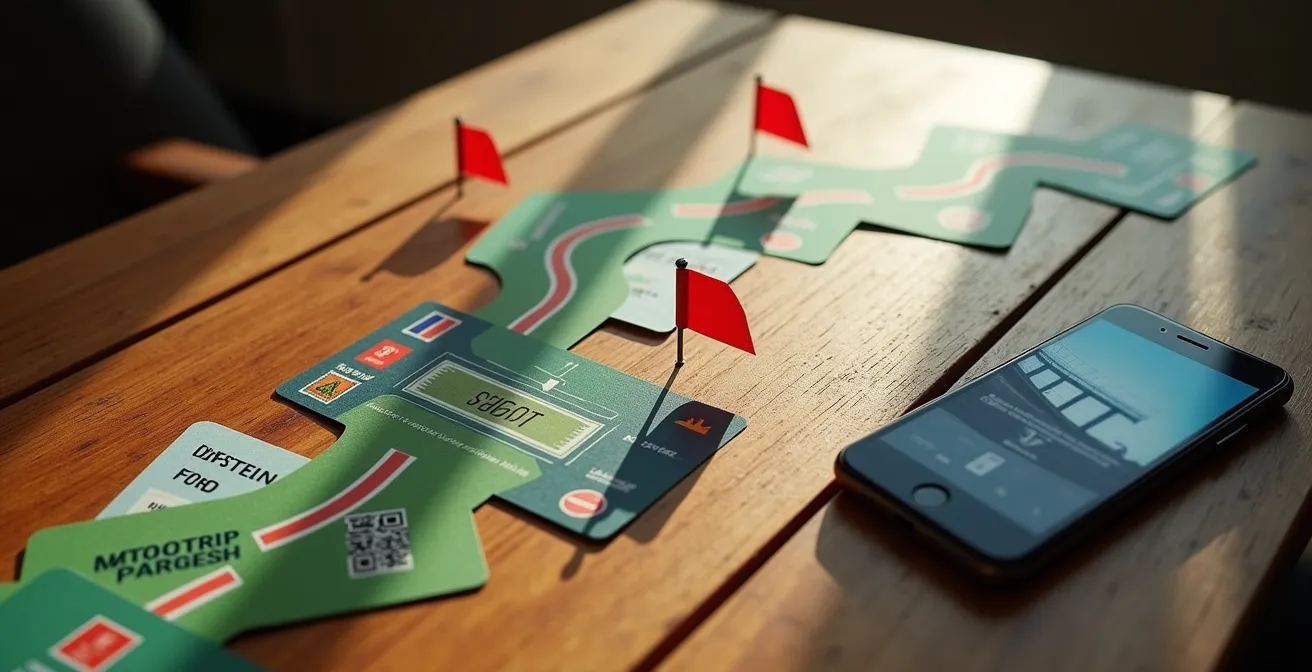
The only truly safe ways to acquire tickets are directly from the club’s official website (by becoming a member and entering the ballot) or through your officially recognized supporters’ club, which often receives a small, dedicated allocation. A third, less common option is official hospitality packages, which are expensive but legitimate. Never buy from a social media comment, a Twitter DM, or an unfamiliar website. The risk is simply not worth the potential heartbreak.
When to Book Your Trip to Ensure the Match Fixture Won’t Be Rescheduled?
You’ve secured your ticket through official channels. Now comes the next hurdle for the international fan: booking flights and accommodation. A common and costly mistake is to book everything the moment the season’s fixtures are announced in the summer. A Saturday 3 PM kickoff in August can easily become a Sunday 8 PM kickoff by the time December rolls around, wreaking havoc on your travel plans.
This isn’t random; it’s driven by broadcast schedules. TV companies in the club’s home country pay billions for the rights to show matches and have the power to move fixtures to maximize viewership. The problem is immense; for example, analysis of recent season data shows that 73% of Premier League fixtures between December and April experience a date or time change. This makes early, non-refundable bookings extremely risky.
To avoid this, you must understand the concept of the “Safe Booking Window.” Fixtures are typically only confirmed in monthly batches, about five to six weeks in advance, after the broadcasters have made their selections. For example, the TV picks for February matches are usually announced in mid-to-late December. The period *after* that announcement is your Safe Booking Window for any match in February.
Case Study: The Cost of Early Booking
During the 2023-24 season, Manchester United had 18 of their league fixtures moved for television broadcast. These changes were often announced just five to six weeks before the match date. A study of fan forums revealed that international supporters who had booked non-refundable flights before the broadcast selections were confirmed faced an average rebooking cost of $400 per person. This highlights the critical financial importance of waiting for the official confirmation within the Safe Booking Window before committing to travel arrangements.
The golden rule is patience. Wait for the official confirmation on the club’s website. It may feel like you’re booking last-minute, but it’s the only way to guarantee you won’t arrive in the city only to find the match was played the day before.
How to Build a Fanbase in Asia Without Playing a Single Home Game There?
How does a European club build a passionate, dedicated following in a market like South Korea, China, or Indonesia without the benefit of playing regular matches there? The old model of simply selling shirts or doing a pre-season tour every few years is obsolete. The new frontier of fanbase building is digital, grassroots, and fan-led. It’s about empowering local fans to become the storytellers and community builders—to run their own cultural embassies.
The key is to provide the tools and recognition for these fans to create content that resonates locally. This is a perfect example of fan-led influence. As Ryan Norys from the Chiliz Global Fan Report explains, this model can be incredibly powerful: “Tottenham Hotspur’s following in South Korea at 42% is the largest share by any team in any particular country, driven by Son Heung-min’s influence as fans become micro-influencers spreading club culture through local platforms.” The club doesn’t just broadcast; it provides the raw materials—player interviews, behind-the-scenes footage—and trusts the local fans to translate, contextualize, and distribute it in a culturally relevant way.
To do this effectively, you don’t need the club’s permission to start. You can build influence from the ground up. Start by creating value for other fans in your region. Become the go-to source for club news on local platforms like WeChat, Line, or KakaoTalk. One of the most powerful strategies is to leverage time zones to your advantage. While Europe sleeps, you can be the “first responder” to overnight news, providing morning summaries and analysis for your local audience. Creating content that explains club traditions from an Asian cultural perspective or adding culturally relevant subtitles to interviews can build an enormous and loyal following. Once you have a documented and growing community, the club will have no choice but to take notice and offer official support.
Key Takeaways
- Emotional connection to a distant club is a real psychological phenomenon called a parasocial relationship, not a lesser form of support.
- Transform passive fandom into active participation by forming an official supporters’ club, which acts as a “cultural embassy” for your team.
- For direct financial impact and deeper engagement, a digital membership is often more effective than buying merchandise.
Why 5G Connectivity Is Now the Number One Demand for Gen Z Fans?
For a new generation of fans, the match day experience is no longer confined to the 90 minutes on one screen. Welcome to the era of the “Deconstructed Broadcast.” Gen Z fans, in particular, engage with football in a multi-layered, interactive way that demands constant, high-speed connectivity. For them, watching the match is an act of creation and participation, not just consumption. This is why seamless 5G in stadiums and strong mobile networks at home are no longer a luxury, but an absolute necessity.
The data paints a clear picture. Research from GWI demonstrates that 61% of sports fans now consume highlights and clips, with a significant portion doing so on mobile devices *during* the live event. They aren’t just watching the main broadcast feed. They are simultaneously on a second screen watching a popular creator’s live breakdown, participating in a real-time poll on Twitter, sharing their own reactions on TikTok, and checking player stats on a fantasy football app. This “in-game fandom” requires a massive amount of data bandwidth that older 4G networks struggle to provide, especially in a crowded stadium environment.
Case Study: The YouTube Shorts Effect
A 2024 analysis of viewing habits showed that users were 1.7x more likely to associate watching sports clips with YouTube Shorts compared to other platforms. This isn’t passive viewing; it’s an interactive loop. A fan sees a great goal, instantly clips it or finds a clip, adds their own commentary or a meme, and shares it with their own followers—all within minutes. The study found that 54% of Gen Z fans now prefer these creator breakdowns to traditional broadcasts. This entire ecosystem collapses without the instant upload/download speeds that 5G enables, making it the foundational technology for the modern fan experience.
Clubs that understand this are investing heavily in stadium-wide 5G and creating digital experiences like AR overlays and in-app voting that depend on this connectivity. As an international fan, a strong internet connection is your stadium, allowing you to participate in this deconstructed broadcast from anywhere in the world.
How Supporter Trusts Can Influence Club Board Decisions Effectively?
Perhaps the ultimate expression of moving from a passive fan to an active participant is through a Supporter Trust. These are democratic, non-profit organizations of fans committed to strengthening the influence of the community on the running of the club. This isn’t just about complaining on social media; it’s about gaining a real, legal stake in the club’s future. And as an international fan, you have a vital role to play in this process. Your voice matters, and organized structures like trusts are how you make it heard in the boardroom.
The core principle is collective action. By pooling resources, trusts can purchase shares in the club, giving them voting rights and a seat at the table. They campaign on issues like ticket prices, stadium development, preserving club heritage, and ownership models. Most trusts welcome international members for a small annual fee, and your membership adds to the collective power and financial clout of the organization. Your distance is not a barrier to influence.
Case Study: The Fan-Owned Future of Portsmouth FC
In a landmark moment, Portsmouth FC’s Pompey Supporters’ Trust became the largest fan-owned club in English football history. A crucial part of this success was the mobilization of its international members. Through digital voting systems and proxy participation, remote fans contributed over £2 million to the fundraising campaign. They proved that with an organized, democratic structure, geographic distance is irrelevant. Coordinated online campaigns demonstrated the global financial backing of the fan base, giving the Trust the leverage it needed to secure ownership and save the club.
Your pathway to influence is clear. The first step is to join your club’s official trust online. Participate digitally by attending Annual General Meetings via livestream and submitting questions in advance. Most trusts allow for proxy voting, where you can designate a UK-based member to vote on your behalf. Encourage your local supporters’ club to join as a bloc or even purchase a share block to amplify your collective voice. By actively engaging in every survey and consultation, you ensure the international perspective is a factor in every major decision the Trust makes. This is the pinnacle of fan-led influence.
Frequently Asked Questions on Supporting Your Club Abroad
What should I do if I’ve been scammed on a ticket?
Immediately contact your bank or credit card company to dispute the charge and initiate a chargeback. Report the fraudulent website or social media profile to the platform it’s on. Take screenshots of all communication and transactions as evidence, and report the incident to the local police in the city where the club is based, providing them with all your documentation.
How can I enjoy match day in the city without a ticket?
The match day experience isn’t confined to the stadium! Find the designated supporters’ pub (often listed on official fan forums) for an incredible atmosphere with fellow fans. Join the pre-match march to the ground to soak in the energy. Many clubs also have official partner venues in the city that host ticketless viewing parties. Finally, consider booking a stadium tour or visiting the club museum on a non-match day to get your own unique experience.
You have the passion, the knowledge, and now the playbook. By moving beyond passive support and embracing your role as a community builder, a digital participant, and an influential voice, you close the distance between you and your club. You become more than a fan; you become part of its living, breathing global fabric.