Fan culture
Fan culture represents far more than casual spectatorship. It encompasses the intricate web of rituals, symbols, social structures and collective behaviors that transform attending a sporting event into an act of tribal belonging. From the thunderous roar that greets a goal to the painstaking organization of choreographed displays involving thousands of participants, supporters create a living, breathing ecosystem that exists in symbiosis with the sport itself.
Understanding fan culture requires examining multiple dimensions: the emotional psychology that binds strangers into unified communities, the political movements fighting for democratic governance, the creative expression manifested in visual spectacles, and the mounting tensions between tradition and commercialization. This exploration reveals how supporters navigate everything from the logistics of international fandom to the existential question of whether their beloved clubs still belong to them or to distant investors.
The contemporary fan experience is being reshaped by forces both empowering and alienating. Digital technology enables unprecedented connectivity while raising privacy concerns. Stadium design innovations amplify atmosphere but sometimes at the cost of affordability. Community initiatives challenge negative stereotypes even as gentrification prices out legacy supporters. This landscape demands that fans continuously adapt while fighting to preserve what makes their culture authentic.
The Foundations: What Separates Supporters from Spectators
The distinction between a spectator and a supporter lies in active participation versus passive consumption. Spectators attend events for entertainment; supporters perceive themselves as essential components of the performance itself. This identity manifests through distinctive markers including scarves, songs, preferred standing locations, and pre-match rituals that have been refined over generations.
Fan culture operates on principles of loyalty that transcend rational analysis. Supporters famously maintain allegiance through relegations, financial collapses, and decades without silverware—a phenomenon psychologists compare to family bonds that persist regardless of circumstance. This unwavering commitment creates intergenerational continuity, with parents inducting children into supporter communities much as one might pass down a family trade or religious tradition.
The hierarchies within supporter culture often distinguish between different commitment levels. Terms like “ultra,” “casual,” and “tourist” reflect perceived authenticity gradients, though these categorizations can fragment communities and create internal tensions. What matters most is not the label but the shared understanding that being a supporter means bearing witness—celebrating triumphs collectively and enduring disappointments together in a way that forges profound social connections.
Bridging Distance: The Challenge of International and Remote Fandom
Globalization has created millions of supporters who possess genuine passion for clubs located thousands of miles away. The psychology of distant fandom involves navigating unique challenges: time zone incompatibilities that require watching matches at inconvenient hours, the impossibility of regular matchday attendance, and skepticism from local supporters who question the authenticity of those who’ve never set foot in the stadium.
International fans increasingly organize local supporter clubs that recreate matchday rituals in pubs and bars across continents. These satellite communities serve crucial social functions, transforming solitary television viewing into collective experiences. They organize annual pilgrimages to the home stadium—journeys that take on quasi-religious significance as fans finally walk the same streets and breathe the same air as their heroes.
The digital membership versus season ticket debate encapsulates this tension. While technology enables remote participation through streaming and social media engagement, it can never fully replicate the sensory totality of stadium attendance: the crowd’s kinetic energy, the percussion of thousands of feet on terracing, the visual spectacle of coordinated displays. International fans must also navigate practical obstacles including ticket procurement scams and the strategic timing required to secure access during their rare visits.
Democracy in Action: Fan Ownership and Governance Structures
The movement toward supporter ownership represents one of fan culture’s most significant political evolutions. Frustrated by exploitative ownership and decisions prioritizing profit over tradition, supporters worldwide have organized democratic trusts to acquire governance stakes. These structures enable fans to transition from consumers to stakeholders with formal voting rights on club decisions.
Models of Supporter Influence
Fan governance operates across a spectrum. Some clubs maintain majority supporter ownership through membership models where one member equals one vote, regardless of wealth. Others feature minority stakes that provide board representation without full control. Even symbolic equity positions can create accountability mechanisms that force ownership to consider supporter perspectives before implementing controversial changes.
Protest Versus Dialogue
Supporters must strategically balance confrontational protest with constructive dialogue. Walkouts, match boycotts, and visual demonstrations grab attention but risk fragmenting the fanbase between hardliners and moderates. The timing of annual general meetings becomes crucial—these gatherings represent formal opportunities to challenge leadership, propose resolutions, and demand transparency regarding financial decisions and strategic direction.
Successful governance movements require sustained organization, legal expertise, and financial resources to acquire meaningful stakes. The challenges are formidable, but the alternative—surrendering control entirely to owners who view clubs as speculative assets—has galvanized supporters into becoming sophisticated political actors capable of mounting serious challenges to entrenched power structures.
The Visual Language: Choreography, Displays and Pyrotechnics
Stadium visual culture transforms supporter sections into canvases for elaborate artistic expression. The choreographed displays known as tifos can involve tens of thousands of synchronized card movements or massive fabric unveilings that cover entire stands. The logistics require military-grade planning: designing the grid layout, distributing materials to specific seat locations, coordinating the precise reveal moment, and accounting for weather variables that could sabotage months of preparation.
Card Versus Fabric Techniques
The choice between card displays and fabric banners involves distinct tradeoffs. Cards enable intricate multi-color designs and dynamic animations as supporters flip between different colored sheets. Fabric allows for monumental scale—a single piece stretched across hundreds of meters—creating jaw-dropping visual impact. Both require extensive volunteer labor and significant financial investment from supporter groups.
The Pyrotechnics Dilemma
Smoke bombs and flares occupy contested territory between spectacular atmosphere creation and safety violations. Traditional pyrotechnics produce thick smoke that obscures sightlines and triggers safety concerns, leading to accumulated fines that can financially cripple supporter organizations. Cold pyro technology offers a compromise—producing visual effects without the dangerous heat and smoke—though regulations vary considerably by jurisdiction and many authorities maintain blanket prohibitions.
Acoustic Architecture
Stadium design profoundly influences atmosphere generation. The ideal acoustic environment functions as a sonic trap—roof structures and stand configurations that contain and amplify crowd noise rather than letting it dissipate. Stand gradients affect both sightlines and sound projection, while the strategic location of singing sections can create resonance throughout the venue. Open corners, while aesthetically modern, often diminish volume by providing escape routes for sound waves.
Some clubs measure decibel levels as quantifiable atmosphere metrics, though purists argue this reduces organic passion to sterile statistics. The debate over artificial noise—pre-recorded chants or music pumped through PA systems—touches core authenticity questions. Conditioning players through specific songs creates Pavlovian responses, with certain tracks triggering instinctive emotional reactions that can energize performance during crucial moments.
Priced Out: The Affordability Crisis and Access Inequality
Fan culture faces an existential threat from gentrification that systematically replaces working-class legacy supporters with affluent corporate hospitality clients. Ticket prices have escalated far beyond inflation rates, fundamentally altering stadium demographics. Calculating fair value becomes subjective—clubs argue that market demand justifies pricing, while supporters contend that community institutions shouldn’t operate on pure capitalist principles.
The season ticket versus membership debate involves complex calculations. Season tickets guarantee access but require substantial upfront capital and often feature auto-renewal mechanisms that trap holders into yearly commitments. Memberships offer flexibility but no attendance guarantee, leaving fans to navigate waiting lists that can stretch for years or even decades at popular clubs.
This affordability crisis doesn’t merely exclude individuals—it transforms the very character of fan culture. When stadium attendance becomes a luxury good, the organic atmosphere generated by passionate supporters gets diluted by spectators treating matches as occasional entertainment rather than identity-defining rituals. The home advantage phenomenon shows measurable decline partly because gentrified crowds lack the intimidating intensity that once made certain venues genuinely hostile environments for visiting teams.
Digital Disruption: Technology’s Double-Edged Impact
The digitization of the stadium journey has revolutionized logistics while creating new vulnerabilities. Mobile ticketing eliminates physical tickets, enabling instant access and reducing fraud, but raises concerns about data privacy as clubs harvest detailed information about fan behavior and movement patterns. The choice between in-seat delivery and kiosk collection for concessions reflects broader tensions between convenience and the traditional communal experience of queuing and socializing.
Connectivity demands have transformed stadiums into data-intensive environments where fans expect seamless WiFi access for sharing experiences on social media and accessing instant replays on personal devices. This creates a paradox: technology that was supposed to enhance engagement sometimes diminishes it, as supporters watch matches through phone screens rather than experiencing them directly.
Digital platforms enable international fans to maintain real-time connections with club culture, but they also commodify experiences that were once exclusively in-person. The tension between democratizing access and preserving the special status of matchday attendance continues to generate debate about what constitutes authentic fandom in an increasingly virtual world.
Beyond the Pitch: Community Action and Social Responsibility
Fan culture increasingly embraces social action as a core identity component. Supporter groups organize food banks that serve vulnerable community members, coordinate solidarity drives for charitable causes, and implement programs that actively debunk stereotypes about football fans as exclusively tribal and aggressive. These initiatives demonstrate that the organizational capacity mobilized for choreographed displays can equally serve humanitarian purposes.
The pre-match march to the stadium exemplifies how supporter culture occupies public space, transforming city streets into temporary territories marked by colors, chants, and collective movement. While these gatherings occasionally attract accusations of hijacking sports for political purposes, many fans argue that clubs are inherently political institutions embedded in communities, making social engagement not a distraction but a natural extension of supporter identity.
This community dimension represents fan culture at its most powerful—channeling tribal passion toward constructive ends that benefit society beyond the stadium walls. When supporters leverage their organizational structures and collective resources for food security, youth development, or challenging discrimination, they demonstrate that football fandom can be a force for genuine social cohesion rather than merely another form of consumer entertainment.
Fan culture will continue evolving as technology, economics, and social values reshape the sporting landscape. Yet the fundamental human need for belonging, collective ritual, and shared identity ensures that supporters will adapt rather than disappear—fighting to preserve authentic connections even as the context transforms around them.
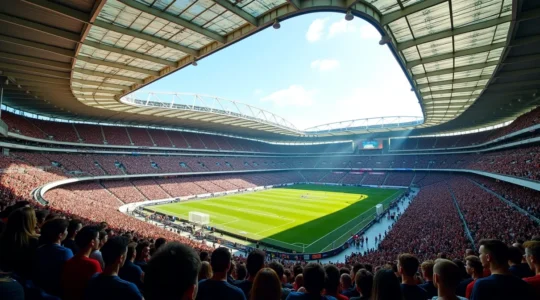
Acoustic Architecture: How Stadium Design Amplifies Crowd Noise Decibels?
A stadium’s deafening roar is not an accident of passion but a deliberate outcome of acoustic engineering, where the structure itself is tuned like a musical instrument. Steep, continuous seating tiers act as a parabolic dish, focusing sound energy back…
Read more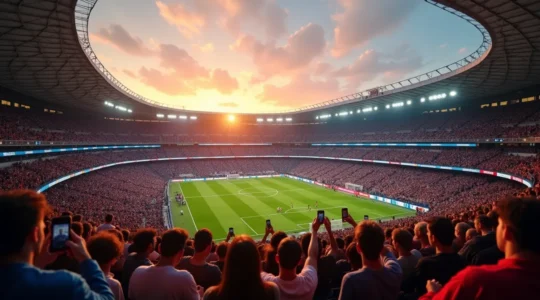
The Smart Stadium Revolution: How Apps Are Redefining the Fan Experience
The power of a smart stadium app isn’t in its list of features, but in its ability to architect a seamless digital journey. This transforms fans from passive spectators into active participants through immersive AR and live data. It eliminates…
Read more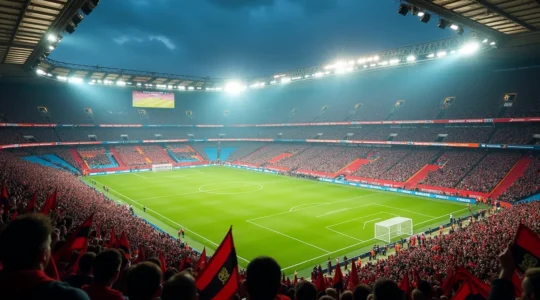
The Psychology of Club Anthems: How Music Conditions Players for Kick-Off?
Club anthems are not merely for atmosphere; they are precise neuro-acoustic tools that condition an athlete’s brain for competition by actively regulating their psychological state. Music serves as an ergogenic aid, regulating arousal levels and creating cognitive dissociation from pre-game…
Read more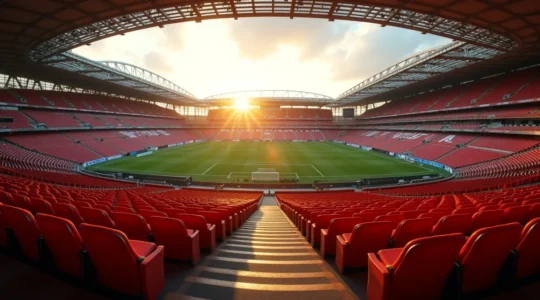
Why Dynamic Pricing Is Making Season Tickets Unaffordable for Locals
Dynamic pricing is not just increasing costs; it’s a strategic tool designed to systematically penalize fan loyalty and dismantle the cultural value of a season ticket. Clubs increasingly prioritize high-spending “football tourists” because TV and commercial revenue have made traditional…
Read more
Why Is Home Advantage Statistically Declining in Modern Football?
The accepted wisdom that home advantage is a pillar of football betting is collapsing under the weight of data, not because of one single factor, but due to a systemic erosion of competitive asymmetries. The introduction of VAR has measurably…
Read more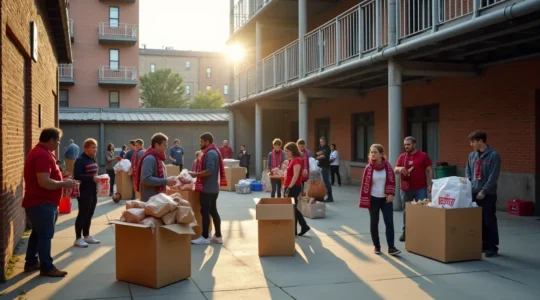
Beyond the Hooligan Stereotype: How Ultras Groups Support Local Communities
Contrary to popular belief, the true power of an ultras group lies not in aggression, but in its sophisticated organizational structure, which functions as a highly effective engine for social and community action. Their capacity for rapid mobilization, honed for…
Read more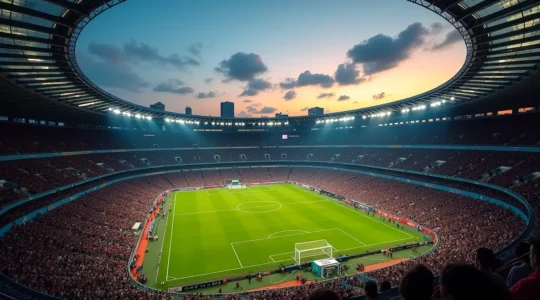
Safe Standing and Pyrotechnics: How to Balance Atmosphere with Safety Regulations?
Contrary to the belief that stricter bans and heavier fines are the solution, the data shows this approach is failing to reduce pyrotechnic use and is financially damaging to clubs. The current punitive model ignores the deep cultural legitimacy of…
Read more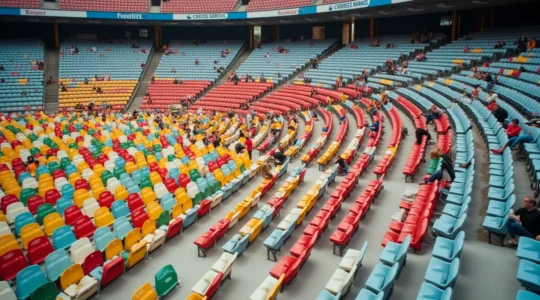
The Logistical Warfare Behind a Full Stadium Tifo
Executing a flawless tifo isn’t about passion; it’s a cold, calculated exercise in logistical precision and risk management. Material science dictates not only the visual vibrancy but also fire safety and weather resistance, which are critical liabilities. Pixel-perfect execution relies…
Read more
How Can Supporter Trusts Effectively Influence Club Board Decisions?
Feeling powerless as a fan is a political problem, not an emotional one, and it requires a political solution. True influence comes from treating the Supporters’ Trust as a disciplined political machine, not just a fan club. Power is built…
Read more
How Global Supporters Maintain Connection with Clubs Thousands of Miles Away?
Supporting a club from afar is not a lesser form of fandom; it’s an opportunity to become a vital part of its global identity. True connection goes beyond buying a jersey; it’s about actively building community and gaining influence. Digital…
Read more